
BRICS Is No Longer Just an Economic Acronym
India’s 2026 presidency offers an opportunity to turn the grouping’s growing global weight into practical cooperation and a stronger voice for the Global South

Aiyan Gulzar Paul
There was a time when BRIC was little more than an acronym used by economists to describe four emerging economies whose economic weight was expected to reshape the global order. Brazil, Russia, India and China were grouped together because of their growth potential, large populations, natural resources and expanding markets. What began as an analytical idea gradually acquired a political life of its own.
Today, BRICS is no longer simply a convenient economic acronym. It has become a major platform for political dialogue, economic cooperation and the articulation of the interests of emerging economies. Its expansion to 11 full members has given it a much wider geographical reach, bringing together countries from Asia, Africa, the Middle East and Latin America.
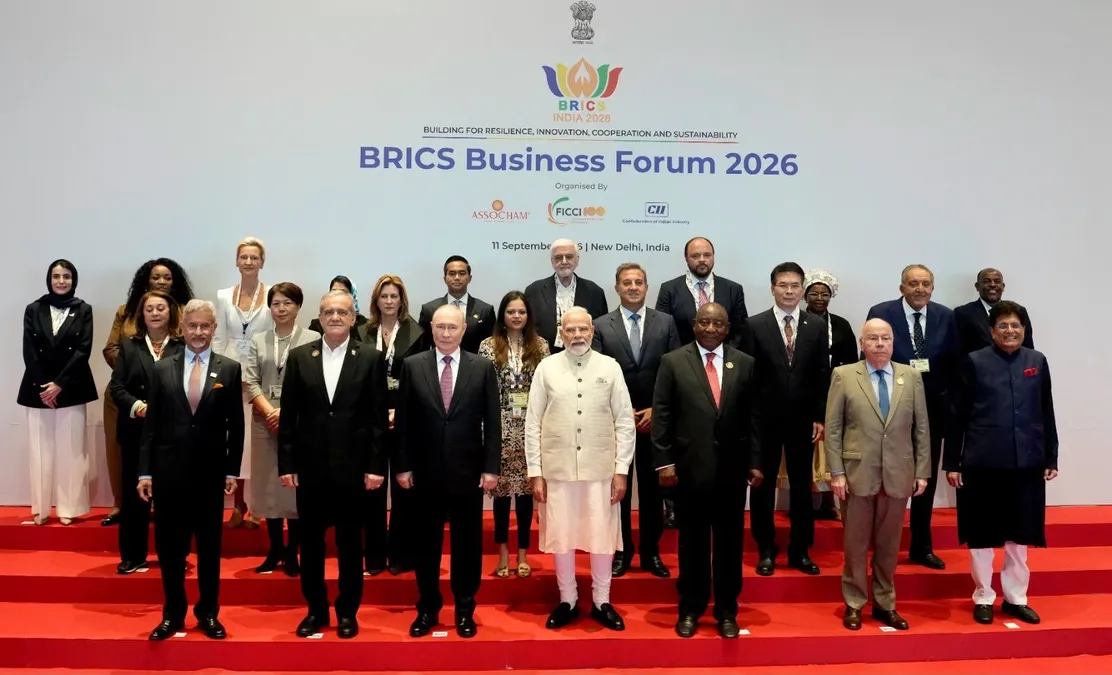
India’s fourth presidency of BRICS in 2026 therefore comes at an important moment. The 18th BRICS Summit in New Delhi on September 12–13 is not merely another annual diplomatic gathering. It comes after a period in which the grouping has expanded considerably, while the international system itself is facing economic uncertainty, geopolitical tensions, technological disruption, climate pressures and questions over the effectiveness of existing multilateral institutions.
India’s challenge is consequently larger than hosting a successful summit. It is to help a much bigger and more diverse BRICS find common ground without allowing the grouping to lose its original purpose.
The theme chosen by India for its 2026 presidency—“Building for Resilience, Innovation, Cooperation and Sustainability”—captures this challenge. The words are broad, but the real test will be whether they can be translated into cooperation that produces tangible benefits for member countries and, more importantly, for the wider Global South.
BRICS today represents 11 countries—Brazil, China, Egypt, Ethiopia, India, Indonesia, Iran, Russia, Saudi Arabia, South Africa and the United Arab Emirates. Collectively, they account for around half of the world’s population and a substantial share of global economic output and trade. That scale gives the grouping considerable weight.
But size alone does not create influence.
The history of international institutions shows that numerical strength does not automatically translate into collective effectiveness. Countries with different political systems, economic interests, foreign-policy priorities and regional concerns have to find enough common ground to act together. For BRICS, this is perhaps the most important question as it enters its expanded phase.
The origins of the grouping are worth recalling because they explain both its strength and its limitations.
The term BRIC was coined by Goldman Sachs economist Jim O’Neill in 2001 to describe Brazil, Russia, India and China as economies whose rising weight could significantly alter the global economic balance. The idea was initially about economics, not the creation of a political organisation.
Yet the four countries gradually discovered that they shared concerns about the existing international economic order. The global financial crisis of 2008 provided a major impetus for closer coordination. The crisis exposed weaknesses in the international financial system and raised questions about whether emerging economies had an adequate voice in institutions such as the International Monetary Fund and the World Bank.
The first BRIC summit was held in Yekaterinburg, Russia, in 2009. What had begun as an economic concept was becoming a forum for political and economic coordination.
South Africa joined the grouping in 2011, turning BRIC into BRICS and extending its geographical representation into Africa.
The transformation was significant. BRICS was no longer simply about four large emerging economies. It increasingly presented itself as a platform through which developing and emerging countries could seek a greater role in global decision-making.
Its agenda also widened. Development finance, trade, food and energy security, climate change, health, agriculture, technology, terrorism and global economic governance gradually became part of its discussions.
The creation of the New Development Bank was among the most important institutional outcomes of this evolution. The idea was not to replace the existing global financial architecture but to provide additional financing for infrastructure and sustainable development, particularly in emerging and developing economies.
India’s own role in this evolution has been important.
India has previously chaired BRICS in 2012, 2016 and 2021. Each presidency came at a different point in global affairs, but each attempted to strengthen practical cooperation within the grouping.
The 2012 Delhi Summit, held under the theme “BRICS Partnership for Global Stability, Security and Prosperity”, focused on global governance reform, sustainable development, food and energy security. The summit also advanced the idea of a BRICS development bank and laid the foundations for the Contingent Reserve Arrangement.
That period demonstrated an important feature of BRICS: its most meaningful achievements are often institutional rather than rhetorical.
The 2016 Goa Summit placed greater emphasis on counter-terrorism, trade, innovation and people-centric cooperation. It also strengthened engagement with countries outside the core grouping through the BIMSTEC outreach initiative.
In 2021, when India chaired BRICS amid the COVID-19 pandemic, health and digital cooperation assumed greater importance. The BRICS Vaccine Research and Development Centre and cooperation on remote sensing were among the initiatives advanced during that period.
These experiences provide useful lessons for the 2026 presidency.
The world has changed since India last chaired BRICS. The grouping itself has changed even more.
The major expansion that began in 2024 brought Egypt, Ethiopia, Iran, Saudi Arabia and the UAE into full membership. Indonesia joined in January 2025, taking full membership to 11 countries. A partner-country framework has also widened BRICS’ engagement with countries outside the core membership.
This expansion has increased BRICS’ economic, demographic and geographical weight. It has also made decision-making more complicated.
The new BRICS is more representative of the diversity of the Global South, but that diversity means that members cannot be expected to agree on every political or economic issue. Their priorities are often shaped by very different regional circumstances.
This is where India’s role becomes particularly important.
India does not need to make BRICS a bloc defined primarily by opposition to another power or another institution. Such an approach would narrow the grouping’s usefulness. The stronger argument for BRICS is that it can complement the existing multilateral system while pushing for reforms that make global governance more representative.
The distinction matters.
A more inclusive global order does not necessarily require dismantling existing institutions. It requires making them more responsive to the realities of the twenty-first century.
The global economy has changed dramatically since many of the major international institutions were created. Emerging economies now account for a much larger share of global production, trade and investment. Yet their representation and influence in several global institutions have not always kept pace with that change.
BRICS can therefore provide a collective platform for pressing for reform while continuing to work within a rules-based international system.
India’s 2026 presidency appears to recognise this need for constructive engagement. The emphasis on resilience, innovation, cooperation and sustainability is particularly relevant because the challenges confronting developing economies increasingly overlap.
Food security is connected to climate change. Energy security is connected to geopolitics. Digital technology is connected to employment and economic competitiveness. Public health is connected to economic resilience. Supply-chain disruptions can quickly become inflationary pressures.
The response cannot be confined to one sector.
This is why some of the outcomes emerging from India’s 2026 presidency are potentially more significant than they may initially appear.
Cooperation in agro-ecology and digital agriculture, for example, addresses two challenges simultaneously: the need to increase agricultural productivity and the need to make farming more resilient to climate pressures. Collaboration involving artificial intelligence, geospatial technology, sensors and data can help countries share knowledge and develop solutions suited to different agricultural conditions.
Similarly, the BRICS initiatives on energy storage and smart grids recognise that the energy transition is not simply about producing more renewable power. It is also about creating systems capable of storing, distributing and efficiently using that power.
The emphasis on logistics and supply chains is equally relevant.
The disruptions of recent years have demonstrated that connectivity is an economic security issue. Countries cannot depend entirely on fragile or overly concentrated supply chains. Cooperation among BRICS members can help strengthen transport networks, logistics systems, manufacturing linkages and value chains.
The proposed cooperation on global value chains and customs administration points in the same direction. Faster customs procedures, common standards and better information sharing may sound technical, but they can have a direct impact on the cost and speed of trade.
For small businesses, these changes matter enormously.
The BRICS MSME Cooperation Portal, the focus on MSME finance and the proposed work on internationalising smaller enterprises could help connect businesses to markets beyond their domestic boundaries. Similarly, the BRICS Startup Innovation Fund and incubator network could give entrepreneurs opportunities to find partners, investors and markets across member countries.
This is where BRICS must increasingly demonstrate its relevance.
A grouping cannot remain meaningful simply because its leaders meet once a year. Its relevance will ultimately be judged by what happens between summits.
Can a farmer benefit from shared agricultural technology? Can a startup find an investor in another BRICS country? Can a small manufacturer enter a new market more easily? Can researchers collaborate across borders? Can students and professionals access new opportunities? Can cities learn from one another about climate-resilient infrastructure?
If the answer to these questions becomes increasingly positive, BRICS will acquire a deeper institutional purpose.
The same principle applies to health and human development.
The 2026 agenda has included cooperation on healthy lifestyles, traditional and complementary medicine, mental health and skills. These may not attract the same international attention as questions of trade or global finance, but they directly affect societies.
The focus on mental health, for instance, recognises a problem that increasingly crosses economic and geographical boundaries. Developing countries face shortages of trained professionals and uneven access to mental healthcare. Sharing training models, building institutional networks and using technology to expand capacity can produce practical benefits.
Similarly, cooperation in education and traditional knowledge can strengthen people-to-people links. The 2026 BRICS education agenda has emphasised academic exchanges, leadership development, research cooperation and knowledge sharing.
These initiatives suggest that BRICS is gradually becoming more than a forum for governments.
That evolution is important because diplomacy becomes stronger when it has a social and institutional foundation.
At the same time, India should remain conscious of the limits of BRICS.
The grouping is not a treaty-based alliance. Its members do not share a single foreign policy. Nor should they be expected to do so.
The differences among members are substantial. Their economic structures vary. Their political systems differ. Their strategic relationships with other major powers are not identical.
Trying to manufacture complete political unity could therefore become counterproductive.
BRICS is likely to be more effective if it concentrates on areas where cooperation is possible despite political differences.
Development finance, trade facilitation, climate resilience, food security, healthcare, education, digital technology, skills, scientific research and infrastructure are all areas where practical cooperation can produce results without requiring members to abandon their individual foreign-policy positions.
This is also where India can make a distinctive contribution.
India has traditionally presented itself as a country that seeks strategic autonomy while maintaining relationships with different parts of the international system. That position can help it act as a bridge within BRICS.
The objective should not be to make every member agree on everything. It should be to identify the largest possible area of agreement and turn that agreement into institutions, programmes and measurable outcomes.
The expansion of BRICS also raises another important question: how far can the grouping expand before decision-making becomes unwieldy?
A larger grouping is undoubtedly more representative. But representation must be matched by institutional capacity.
The creation of a partner-country category provides one way of balancing these objectives. It allows more countries to engage with BRICS without immediately changing the full-membership structure.
The challenge now is to ensure that this wider network remains meaningful rather than becoming another layer of meetings and declarations.
The same caution applies to the growing number of initiatives.
India’s 2026 presidency has involved more than 350 meetings and high-level engagements across 25 cities. That scale demonstrates the breadth of the agenda, but it also creates a risk familiar to large international organisations: too many initiatives can dilute attention and make implementation difficult.
The next stage, therefore, should be consolidation.
A smaller number of well-funded, clearly monitored and measurable projects may ultimately do more for BRICS than a long list of declarations.
The New Development Bank offers an example of why institutions matter. Where an idea acquires a permanent institutional structure, financing mechanism and operational capacity, it has a greater chance of surviving changes in political priorities.
BRICS will need more such mechanisms.
It also needs greater participation from the private sector, universities, research institutions, civil society and young people. Governments can create frameworks, but innovation does not come exclusively from governments.
The involvement of startups, universities, researchers and businesses can help turn diplomatic agreements into economic and technological partnerships.
This is especially relevant to India’s emphasis on innovation.
India has built considerable capacity in digital public infrastructure, startups, space technology, financial technology and scientific research. Sharing such experiences with other developing economies can strengthen South-South cooperation, while India itself can learn from the strengths of its partners.
The relationship should not be presented as one-way assistance. The Global South has considerable knowledge and experience to share.
African countries have different experiences in managing development challenges. Gulf economies have significant experience in energy and infrastructure. Brazil has important agricultural and environmental expertise. China has enormous industrial and technological capacity. Russia has capabilities in energy, science and space. Southeast Asian economies have developed strong manufacturing and trade networks.
BRICS can become valuable precisely because it brings these different experiences into one forum.
That is the larger opportunity before India.
The New Delhi summit comes at a time when the international system is being reshaped. Economic power is becoming more distributed. Technology is changing the nature of competition. Climate change is altering development priorities. Supply chains are being reconsidered. Developing countries are demanding greater representation.
BRICS cannot solve all these problems.
Nor should it pretend to.
Its real value lies in creating a platform where countries representing a significant portion of humanity can discuss these challenges and build practical partnerships.
India’s responsibility is to help the grouping retain that focus.
The fourth Indian presidency is therefore not simply a matter of diplomatic continuity. It is an opportunity to demonstrate that an expanded BRICS can remain effective.
The question after the New Delhi summit should not merely be how many leaders attended, how many declarations were adopted or how many meetings were held.
The more important question will be what happens next.
Do the new cooperation mechanisms receive sustained support? Do businesses find new markets? Do researchers collaborate more easily? Do farmers gain access to better technology? Do young people gain new skills? Do member countries become more resilient to economic and climate shocks? Does the grouping contribute constructively to reforming global governance?
These are harder questions, but they are also the questions that will determine BRICS’ future.
The grouping has already crossed an important threshold. It is no longer the four-country forum that emerged from an economic projection two decades ago. Its membership is larger, its agenda is broader and its political significance is greater.
But expansion should not become an end in itself.
The real measure of BRICS will be whether its growing weight can be converted into useful cooperation.
For India, the opportunity is to provide leadership without turning leadership into dominance; to build consensus without pretending differences do not exist; and to champion the Global South without reducing BRICS to an anti-Western platform.
That is a difficult balance, but it is also where India can make its strongest contribution.
A successful BRICS will not be one that speaks with one voice on every international dispute. It will be one that can work together despite differences where cooperation serves common interests.
The world does not need another forum that produces declarations and then moves on.
It needs institutions that can help countries deal with the problems that increasingly cross borders—food insecurity, climate change, public health, technological disruption, supply-chain vulnerability, unemployment and unequal access to development.
BRICS has the scale to matter.
India’s 2026 presidency has the opportunity to show that it can also deliver.
The journey from BRIC to BRICS has already been remarkable. The next chapter should be about converting that growth into results.
For India, that is perhaps the most important task at the helm: to help turn the growing voice of the Global South into practical cooperation, credible institutions and a more representative global order.
Comments are closed.