

Suhail Saeed Lone
“The people of Jammu and Kashmir have experienced enough suffering to understand the true cost of violence. They know that terrorism has never offered lasting answers. It has only prolonged pain.”
For more than three decades, Jammu and Kashmir has endured a painful chapter marked by violence, terrorism, and human suffering. Generations have grown up witnessing conflict that claimed thousands of lives, shattered families, disrupted education, weakened the economy, and left deep emotional scars across society. Regardless of political beliefs, one truth remains beyond dispute: ordinary people have borne the greatest burden of this violence.
A reported admission by self-styled commander of terror outfit Hizbul Mujahideen Shamsheer Khan regarding the presence of Pakistani fighters in Kashmir has once again revived a debate that has shaped the region’s history for decades.
A Candid Confession
https://youtube.com/shorts/UJocX8e2lmY?si=ktTjQL1HjiEoanzw
India has consistently maintained that cross-border terrorism has played a central role in sustaining militancy in Jammu and Kashmir. Such reported statements inevitably draw renewed attention to this long-standing position and invite reflection on the immense human cost that the conflict has imposed on the people of the Valley.
For many outside Kashmir, discussions on terrorism often revolve around geopolitics, diplomacy, or security. For those who have lived through it, however, the issue is intensely personal. It is measured not in headlines but in empty chairs at family gatherings, abandoned homes, disrupted childhoods, and dreams that never had the chance to flourish.
Thousands of innocent civilians, members of the security forces, elected representatives, journalists, teachers, and young people have lost their lives over the years. Countless others continue to live with memories of violence, displacement, and uncertainty. Entire communities experienced decades in which fear became a part of everyday life, and normalcy often seemed out of reach.
As a Kashmiri, I believe that history has already delivered its verdict. Terrorism has brought neither prosperity nor lasting solutions. Instead, it has inflicted immeasurable suffering upon the very people in whose name it claimed to speak. Families were divided, educational opportunities were interrupted, businesses struggled, tourism declined, and generations of talented young people saw their aspirations overshadowed by instability.
No ideology, no political objective, and no strategic calculation can justify the loss of innocent human life.
Violence has never built schools. It has never created jobs. It has never attracted investment. It has never strengthened communities. Instead, it has destroyed opportunities, delayed development, and deprived countless young people of the future they deserved.
Today, however, Kashmir is witnessing signs of change.
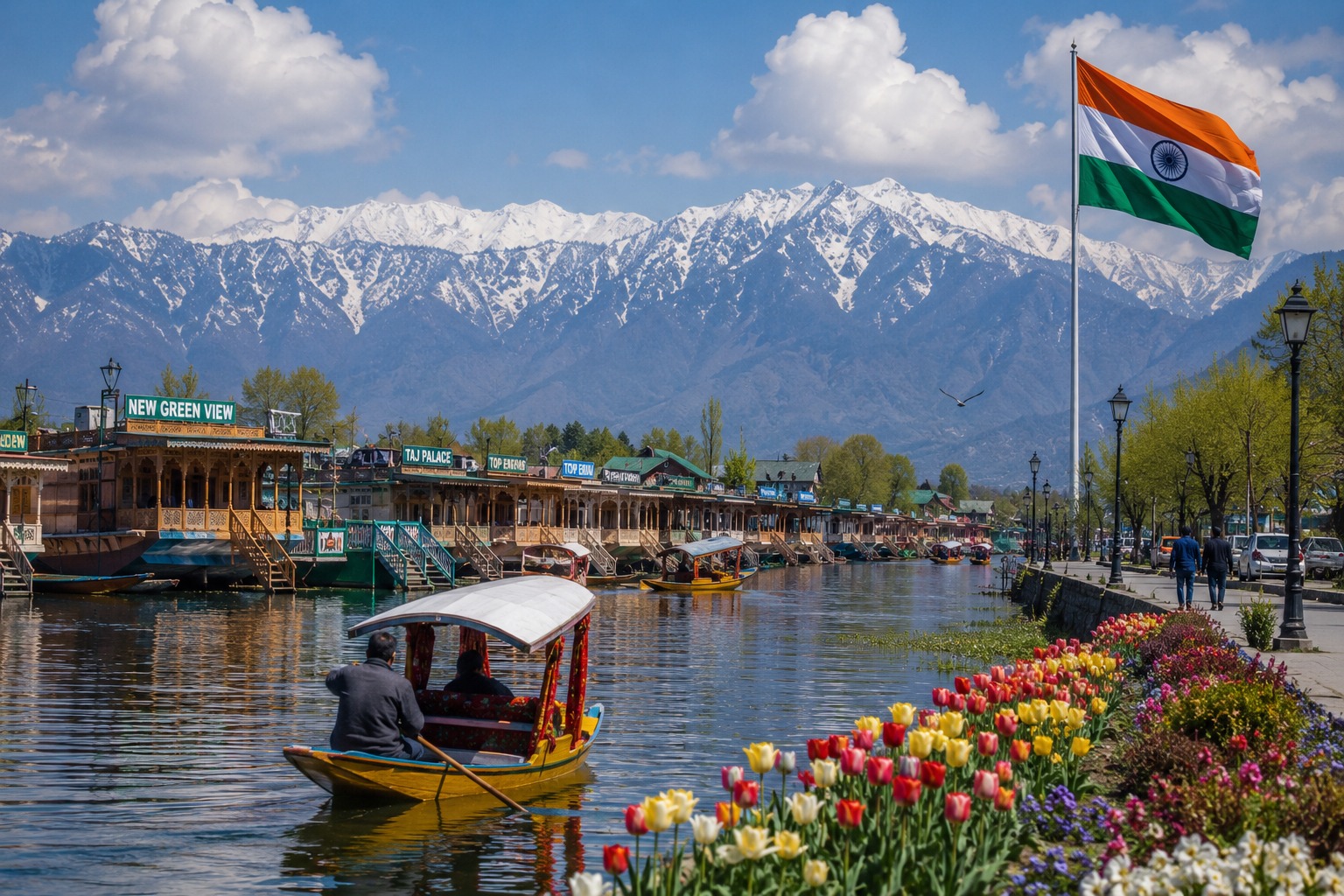
The Valley is gradually reclaiming an identity rooted not in conflict but in possibility. Tourism has witnessed renewed growth. Infrastructure projects are improving connectivity. Educational institutions are expanding opportunities for young people. Healthcare facilities are being strengthened. New roads, bridges, tunnels, and public infrastructure are connecting remote areas with markets and services. Entrepreneurship is finding new space, and many young Kashmiris are choosing innovation, education, sports, technology, and business over the politics of violence.
This transformation reflects the aspirations of ordinary people.
The overwhelming majority of Kashmiris want what citizens everywhere desire: peace, dignity, employment, quality education, reliable healthcare, economic opportunity, and a secure future for their children. They want their homeland to be known for its breathtaking landscapes, rich cultural heritage, hospitality, and human talent—not for conflict or extremism.
The youth of Kashmir, in particular, represent the Valley’s greatest strength.
They possess immense potential in education, entrepreneurship, information technology, tourism, agriculture, arts, and sports. Their ambitions extend far beyond the narratives of violence that once dominated the region. They seek opportunities to compete nationally and globally, build successful careers, establish businesses, contribute to society, and participate confidently in India’s economic growth story.
These aspirations deserve encouragement, not disruption.
Peace creates possibilities that conflict never can.
As someone who belongs to this land, I also wish to acknowledge the sacrifices made by countless individuals who have worked to restore stability in Jammu and Kashmir. Members of the Jammu & Kashmir Police, the Central Reserve Police Force, the Indian Army, and other security agencies have served under extraordinarily difficult circumstances for many years. Many personnel laid down their lives in the line of duty, while others continue to perform demanding responsibilities to maintain public safety.
Their sacrifices, alongside the resilience shown by ordinary citizens, have contributed to creating conditions in which schools function, businesses reopen, tourists return, and communities begin rebuilding confidence in the future.
At the same time, sustainable peace cannot rest solely on security measures. It must be strengthened through inclusive development, responsive governance, educational opportunities, employment generation, social justice, and continued engagement with the aspirations of the people. Lasting stability is built when citizens feel that peace delivers tangible improvements in their everyday lives.
Kashmir’s future should therefore be shaped not by fear but by hope.
It should be defined by classrooms rather than conflict, innovation rather than isolation, and investment rather than instability. Every child who enters school instead of growing up amid violence represents a victory for society. Every entrepreneur who opens a business, every tourist who visits the Valley, every farmer who reaches new markets, and every student who succeeds through education strengthens the foundations of peace.
The people of Jammu and Kashmir have experienced enough suffering to understand the true cost of violence.
They know that terrorism has never offered lasting answers. It has only prolonged pain.
Today, the aspirations of the younger generation are remarkably clear. They seek progress over confrontation, opportunity over uncertainty, and development over destruction. They want Kashmir to become a destination for tourism, investment, education, innovation, and cultural exchange rather than a symbol of conflict.
The message emerging from the Valley is increasingly one of resilience and renewal.
It is a message that rejects the cycle of violence and embraces the possibilities created by peace. It reflects the determination of ordinary citizens to move beyond decades of tragedy and build a future founded upon stability, democracy, economic growth, and mutual respect.
Kashmir has always possessed extraordinary natural beauty.
Its greatest strength, however, lies in its people—their resilience, talent, and enduring hope despite decades of hardship.
That hope deserves every opportunity to flourish.
The time has come to leave behind the shadows of violence and embrace a future where every child can dream freely, every family can live without fear, and every citizen can contribute to the progress of the nation.
Kashmir deserves peace.
Kashmir deserves development.
And above all, Kashmir deserves a future where its identity is defined not by the wounds of the past but by the promise of tomorrow.
Comments are closed.