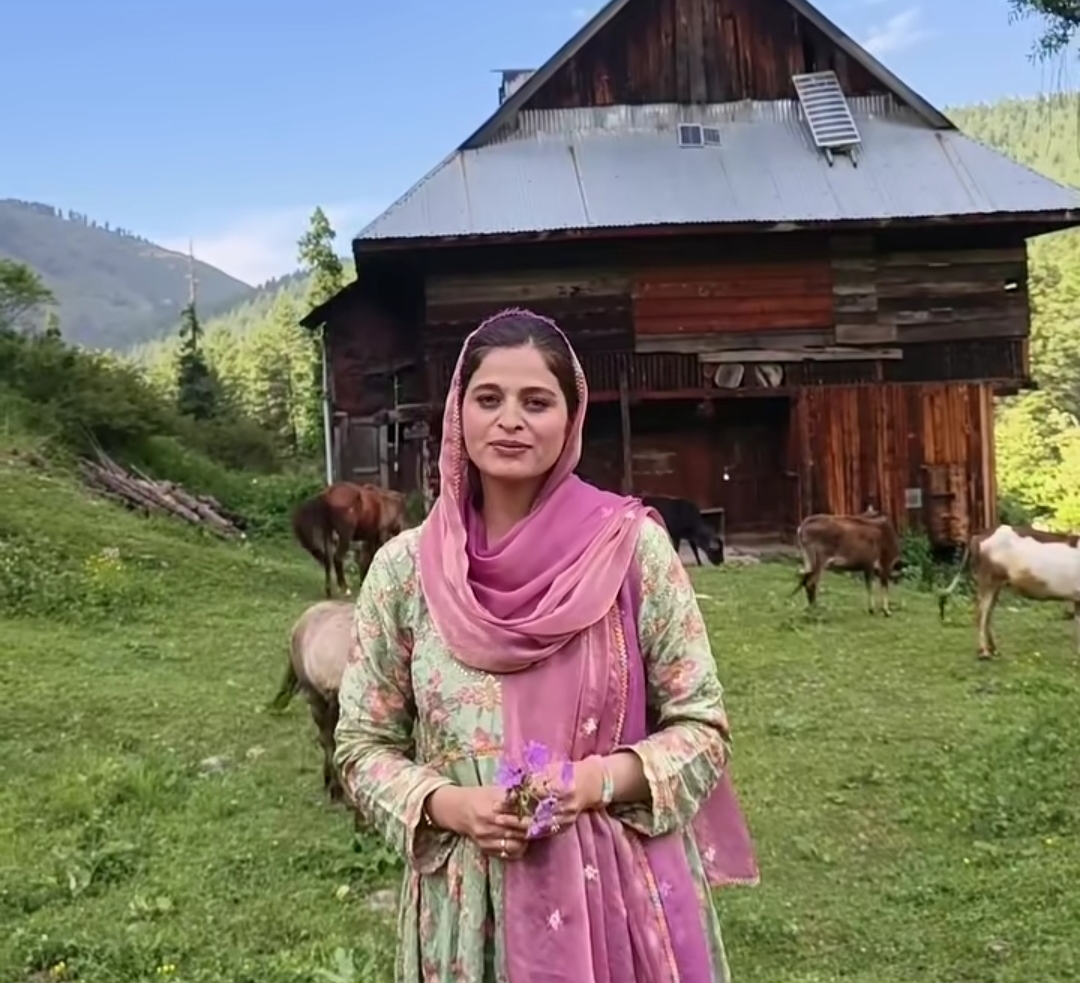
SRINAGAR, June 4: For Mymoona Akhter, a master’s degree in statistics was never meant to be a shield. It became a launchpad. Now working with the Kashmir Women’s Organisation (KWO), the young girl from Dolipora Trehgam in north Kashmir’s Kupwara district is quietly brewing a digital revolution — in her own mother tongue.
Speaking to Kashmir Convener, Mymoona recalls a childhood split between fetching drinking water from 2 km away and walking the same distance to a far-off school, only to have her father relocate the family to Srinagar for basic education. “There were no facilities in our village,” she said.
But the move to the city did not shield her from a deeper battle. “In the beginning, I faced a lot of backlash. Our society doesn’t accept outspoken, strong women. I was lost in depression,” she said.
The turning point came when she heard about a fellowship from KWO. “I was interviewed by its CEO, Darakshan Hassan. She counselled me, boosted my confidence, and made me realise my worth. My life got a direction.”
Soon, Akhter began making videos on women’s empowerment — first in Urdu, then in Pahari. “People liked it, especially my Pahari tribal community. That’s when I realised I can make a change by introducing the Pahari language to the world.”
She said it was not easy. The road ahead, however, remains uneven. “Social stigmas are still there. People criticise my work because they think women can’t be part of it. They target my parents with negative comments to stop me — but never say a word to my face. Because they know if they do, they’ll get much better answers from me.”
“Travelling to unexplored Pahari villages — my current mission — is another hurdle,” she said. “Being a girl, travelling is not easy. I take my cousins along for safety. I cannot go alone — that’s the biggest challenge.”
On social media, she said she keeps it simple: short videos naming everyday objects in Pahari, inviting viewers to share words from other languages. “It connects people. They enjoy it.”
Her focus is deliberate — old houses, old machinery, even a story on vintage cameras. “Social media lets the world see our real Pahari culture. We can show what we are, so the world recognises us.”
In a message, she said: “Leave your comfort zone. Find your purpose. Life without an aim is meaningless. Nobody will feed you success. People will try to pull you down — that’s the best they can do. Your life, your ambition. Stay within limits, but never compromise on self-respect.”
Asked whether society is changing, she said: “What I’ve experienced — when you begin making your identity, society refuses to accept it. They try their best to pull you down. But when you achieve something and gain respect, then the same society comes to praise you. Society changes with its own convenience.”


Comments are closed.