
Why Discipline Always Beats Motivation

Dar Muqeet Gull & Himayat Shafi


“Discipline transforms effort into habit, and habit into identity—until the things you once struggled to start become a natural and unshakable part of your daily life.”

In an age driven by instant gratification and constant stimulation, motivation has become a cultural obsession. Scroll through any social media feed, and you will find an endless stream of inspirational quotes, success stories, and high-energy speeches promising to unlock your potential. For a moment, they work. You feel energized, determined, and ready to take on the world.

But then, almost as quickly as it arrives, that surge of motivation fades.

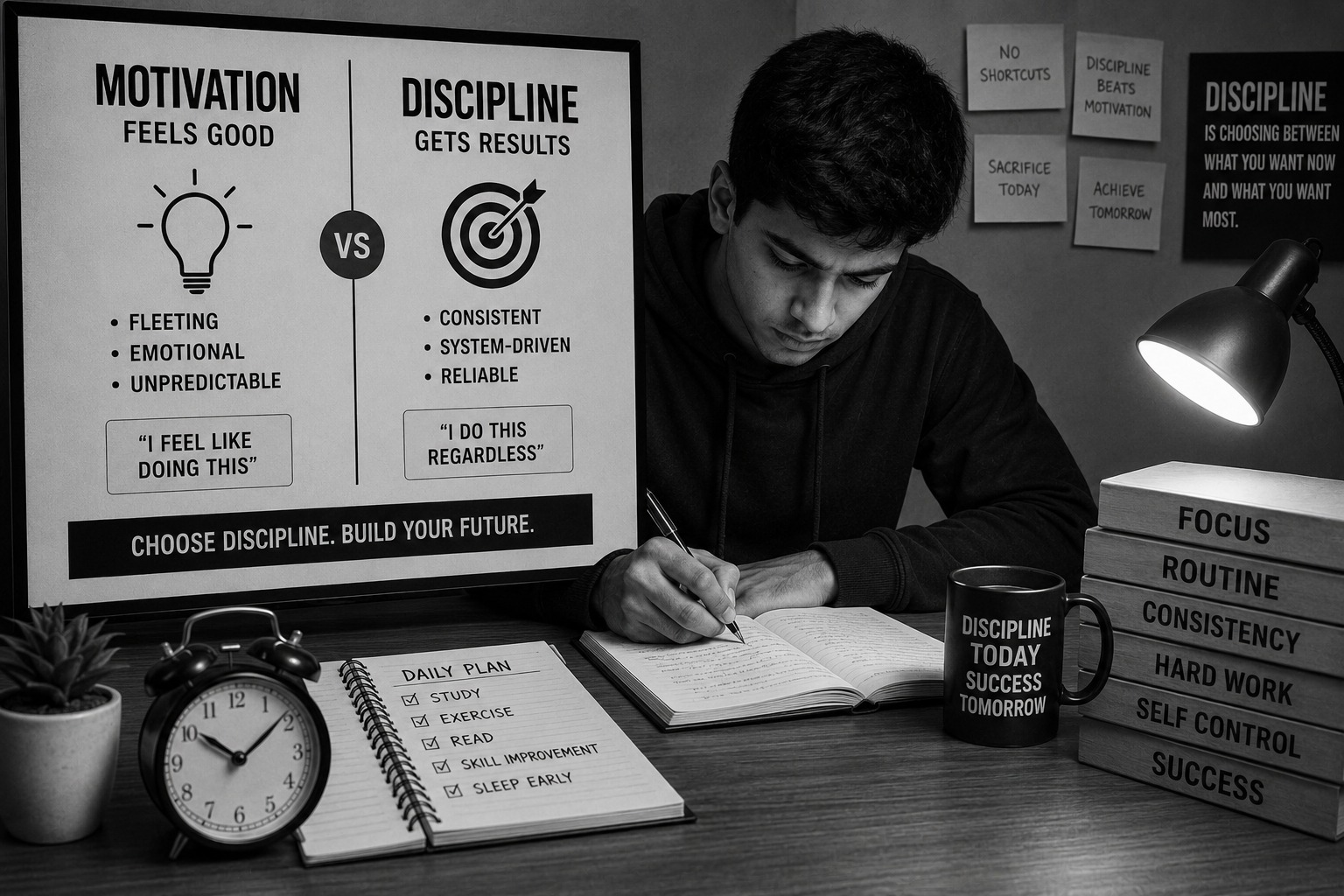
The uncomfortable truth is this: motivation is fleeting. It is emotional, unpredictable, and often unreliable. Discipline, on the other hand, is quiet, consistent, and far more powerful. While motivation may ignite the spark, it is discipline that sustains the fire.

Motivation feels good. It gives us a sense of possibility—a belief that change is within reach. After watching a powerful speech or reading about someone’s journey to success, we often feel invincible. We make plans, set goals, and promise ourselves that this time will be different.

Yet, within days—sometimes hours—that feeling begins to fade. Life intervenes. Energy dips. Distractions creep in. What once felt urgent becomes optional. The gym session is skipped. The study plan is postponed. The goal quietly slips into the background.

This cycle is familiar to many. It creates a pattern of bursts and breaks—periods of intense effort followed by long stretches of inactivity. Progress becomes inconsistent, and frustration builds.

The problem is not a lack of ambition. It is a misplaced reliance on motivation as the primary driver of action.

Discipline operates on a different principle altogether. It does not depend on how you feel; it depends on what you do.

At its core, discipline is about consistency. It is the ability to show up, day after day, regardless of mood, energy, or external circumstances. It is choosing action over comfort, routine over impulse, and long-term goals over short-term gratification.

Consider a simple example: a student preparing for an important exam. Studying for three hours every day over a hundred days will yield far greater results than cramming for twelve hours only on days when motivation strikes. The difference lies not in effort, but in consistency.

Discipline transforms effort into habit. And habits, once formed, require far less mental energy to maintain. One of the most fundamental differences between motivation and discipline lies in their foundation.

Motivation is emotion-based. It asks, “Do I feel like doing this?”
Discipline is system-based. It asks, “Is this part of my routine?”

This shift—from feeling to structure—is what separates those who struggle from those who succeed.

When your actions are tied to emotions, they become unstable. Emotions fluctuate. Some days you feel driven; other days, you don’t. If your productivity depends on these fluctuations, it will inevitably suffer.

Systems, however, provide stability. A routine removes the need for constant decision-making. You don’t wake up and debate whether to study, exercise, or work—you simply follow the structure you have created. In this sense, discipline is not restrictive; it is liberating. It frees you from the unpredictability of motivation and anchors you in purposeful action.

There is a common misconception that successful people are somehow more motivated than others—that they possess an endless drive that keeps them moving forward. In reality, this is rarely the case. Whether they are students, athletes, writers, or business leaders, successful individuals do not rely on constant inspiration. They rely on systems. They build habits. They follow schedules.

They show up even when they don’t feel like it. An athlete does not skip training because they are tired. A writer does not wait for inspiration to begin writing. A student does not postpone studying because the mood is not right. They act because it is part of their routine.

Success, therefore, is not the result of extraordinary bursts of effort, but of ordinary actions repeated consistently over time. Discipline does more than improve productivity—it strengthens the mind. Every time you choose to act despite discomfort, you reinforce a powerful internal message: I am in control.

This repeated act of choosing discipline over ease builds self-control, resilience, and confidence. Over time, it becomes easier to resist distractions, overcome laziness, and confront challenges.

In contrast, relying on motivation often weakens this mental framework. When actions are taken only when you feel like it, the mind becomes conditioned to avoid discomfort. Tasks that require effort or patience begin to feel overwhelming.

Discipline reverses this pattern. It trains the mind to accept effort as a normal part of growth.  None of this is to suggest that motivation has no value. On the contrary, it plays an important role—particularly at the beginning.

Motivation is often what sparks action. It provides the initial push, the sense of urgency that gets you started. Without it, many people might never take the first step. But motivation alone is not enough.

Think of it as lighting a fire. It creates the initial flame, but without fuel, that flame will quickly die out. Discipline is the fuel. It keeps the fire burning long after the initial spark has faded. Understanding this distinction is crucial. It allows you to use motivation wisely—without becoming dependent on it.

The transition from motivation to discipline requires a change in mindset. It involves moving away from the idea of “big efforts” toward the practice of “small, consistent actions.”

This does not mean working harder; it means working smarter.

Start with manageable routines. Set realistic goals. Focus on consistency rather than intensity. Over time, these small actions compound, leading to significant results.

A single day of discipline may not seem impactful. But repeated over weeks, months, and years, it becomes transformative. Ultimately, discipline is not just a tool—it is a way of life.

It shapes how you approach your goals, how you manage your time, and how you respond to challenges. It creates a sense of structure and purpose that extends beyond specific tasks. People who embrace discipline do not wait for the perfect moment. They create momentum through action. They understand that progress is built, not felt. This mindset shifts the focus from outcomes to process. Instead of obsessing over results, disciplined individuals concentrate on what they can control—their daily actions. And in doing so, they naturally move closer to their goals.

In a world that constantly seeks quick inspiration, discipline offers something far more valuable: reliability. Motivation may come and go, influenced by mood, environment, and circumstance. Discipline remains steady. It does not promise excitement, but it delivers results. The difference between those who achieve their goals and those who don’t is rarely talent or opportunity. More often, it is consistency.

So, if you are waiting to feel motivated, you may be waiting indefinitely. Instead, start building discipline. Create routines. Follow through. Show up, even when it is difficult. Because in the end, success is not determined by how often you feel inspired—but by how often you act despite not feeling it. And that is why discipline will always beat motivation.

Comments are closed.