
Learning to Heal: A Nursing Student’s Journey Through Fear, Failure, and Humanity

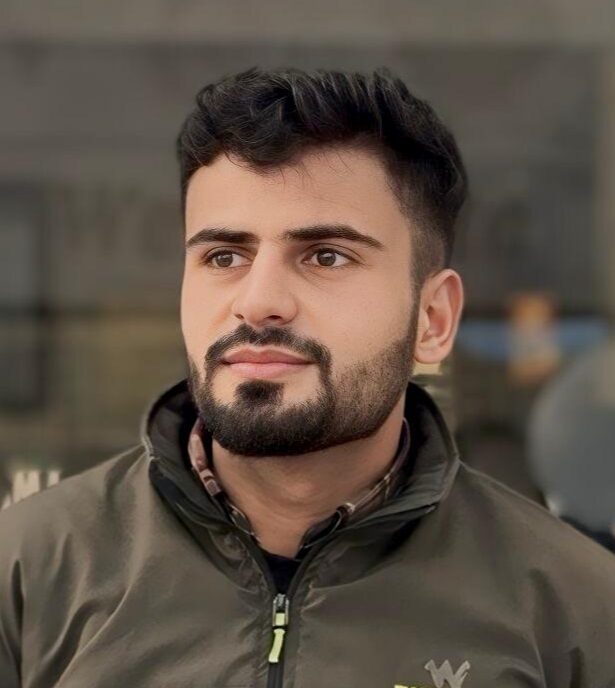
Mohammad Arfat Wani


“What remained with me was not the physical pain of injury, but the care I received. In that moment, I understood that healthcare is not just about procedures—it is about empathy and humanity.”

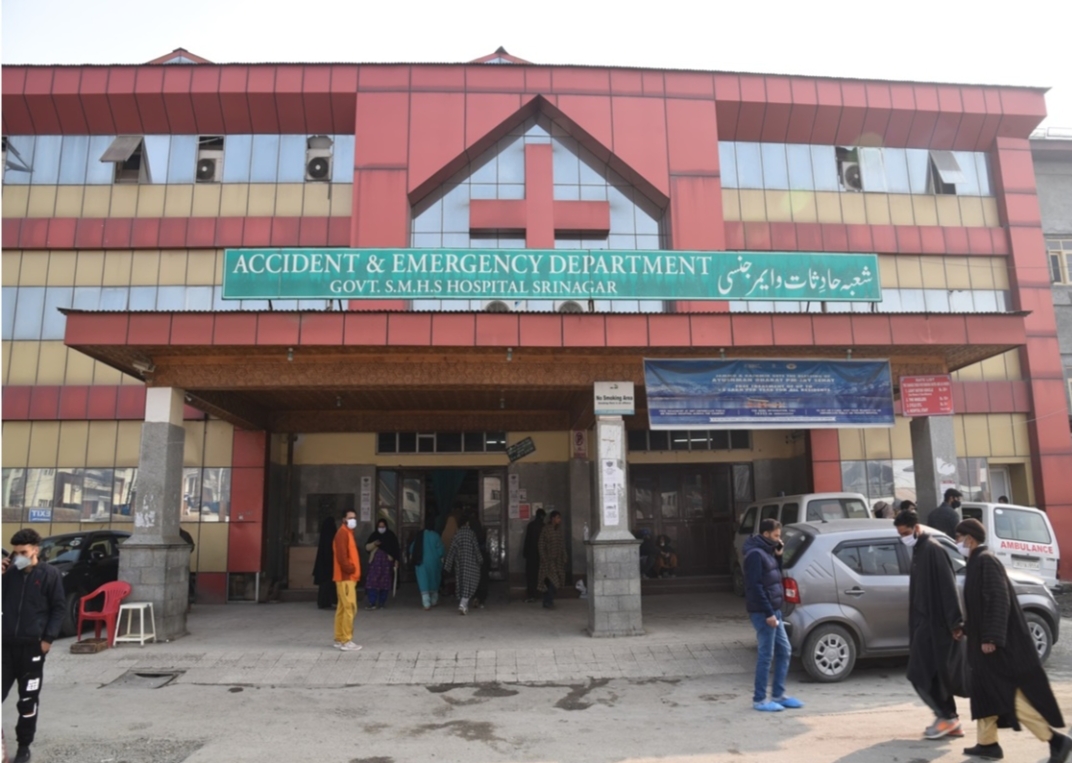
On the first day of April 2026, I walked into SMHS Hospital in Srinagar carrying more than just a student’s identity. I carried uncertainty, quiet fear, and a fragile sense of purpose. Hospitals, from a distance, often appear as institutions of science and discipline. But stepping inside, I realized they are far more than that. They are spaces where life hangs in delicate balance, where pain is both visible and silent, and where hope is not an abstract idea but a daily necessity.

The long corridors, the steady footsteps of staff, and the expressions on patients’ faces made one thing clear—this was not merely a place of learning, but a place where responsibility begins early and grows quickly. I was posted in Ward 5 of the medicine department, where I met Bilal Sir and Rozy Maam. Their calmness and welcoming nature helped ease my nervousness. Watching my seniors, Imtiyaz Sir and Seerat Maam, I saw a blend of skill and humility that I hoped to achieve someday. Alongside my fellow students—Yasir, Owais, and Aiman—I began this journey with hope, though I still felt unsure about what lay ahead.

On the very first day, our Clinical Incharge, Saika Maam, tested us—not just our knowledge, but our confidence. Among the many things she said, one stayed with me: “Observation is half learning.” At that moment, it felt like a simple statement, almost routine. But with time, I understood its depth. In a profession like nursing, where every detail matters, observation is not passive—it is active, intentional, and foundational.

Despite this, my initial days in the ward were frustrating. The routine was limited mostly to medication rounds. With too many students and too few opportunities, I often found myself standing at the sidelines. Slowly, a sense of dissatisfaction crept in. It began to feel like I was merely attending, watching, spending money, and returning without gaining meaningful experience. Doubts began to form—about the system, about my learning, and at times, about my place in this profession.

Then, on the third day, something happened that changed everything.

While breaking an ampoule, it slipped from my hand, and a sharp piece pierced my thumb. The bleeding was heavy, and the shock immediate. I had done the same task before without issue, but this time it went wrong. I was taken to the emergency department, where stitches were advised, though I opted for dressing instead. What remained with me, however, was not the physical pain—but the care I received.

Tabasum Maam personally attended to me, administered an injection, and insisted I take two days of rest. Her concern went beyond duty; it reflected genuine humanity. That moment quietly shifted something within me. Healthcare, I realized, is not just about procedures and protocols—it is about empathy, about seeing the person behind the patient, and the vulnerability behind every situation.

During those two days at home, I reflected deeply. I understood that if I wanted to learn, I could not remain passive. I needed to step forward, to seek opportunities rather than wait for them.

When I returned, I made a decision that changed the course of my training—I moved to the emergency department.

With the help of my friend Junaid Shafi from GMC Srinagar, I entered an environment that was completely different from what I had experienced before. The emergency ward was fast-paced, demanding, and unpredictable. But most importantly, it was real. Learning here was not theoretical—it was immediate, practical, and intense.

It was here that I met Navi Maam and Rafiya Maam. At first, their simplicity made me think they were senior students. But I soon realized they were experienced staff members. What made them exceptional was not just their clinical skill, but their humanity. They taught patiently, explained thoroughly, and never allowed fear to overshadow learning.

There was a moment when Rafiya Maam introduced me to someone as “my cousin.” It was a small gesture, but it made me feel valued, included, and respected. In their presence, mistakes did not feel like failures—they felt like steps in learning. That kind of environment is rare, and it is what truly shapes confidence.

In the emergency ward, learning accelerated. I began to understand patient care in its true sense. I learned how to administer medications—oral, intravenous, and intramuscular. I practiced setting IV lines, managing drips, inserting cannulas, and taking blood samples. Hygiene and infection control became real concerns rather than textbook concepts. Communication, too, emerged as a critical skill—speaking respectfully with patients and their families often made as much difference as medical intervention.

There were days when I stayed in the ward until late at night—sometimes until 2 AM—and returned again early in the morning. It was exhausting, but fulfilling. In just ten days, I felt I had learned more than I had in all my previous days combined.

But the emergency ward also came with its own risks.

One night, due to the negligence of a patient’s attendant, I suffered a needle prick injury. It was a moment of fear and uncertainty. Navi Maam and Rafiya Maam immediately took action—sending the patient’s blood for testing and ensuring all necessary precautions were taken. Thankfully, the result was negative. But the incident left a lasting impression on me about the risks healthcare workers face every day.

Their concern did not stop there. They even tried to arrange a place for me to rest. Eventually, I managed to stay with friends, but their effort reflected a deeper truth—healthcare is not just about caring for patients; it is also about caring for each other.

Despite my dedication, not everything went smoothly. When it was discovered that I was working outside my assigned roster, I was marked absent for seven days. It hurt deeply because my intention had only been to learn. It made me question the rigidity of systems that sometimes fail to recognize genuine effort. Yet, even this experience taught me something—resilience.

Amid all this, another transformation was taking place within me.

Patients and attendants began addressing me as “Sir.” It felt good, but it also brought a sense of responsibility. I became more mindful of my actions, my words, and my presence. Trust is not something given lightly, especially in a hospital setting. And once given, it must be honored.

There were moments that stood out—like drawing a blood sample from a patient connected to a prominent public figure. It was not about status, but about confidence. For the first time, I felt capable of applying what I had learned in a meaningful way.

But beyond skills and procedures, what impacted me most was the emotional connection with patients. Many times, I looked at them and saw my own grandparents. Their pain felt personal. Their recovery felt meaningful. I stopped seeing patients as cases and started seeing them as individuals—with stories, struggles, and dignity.

This shift, perhaps, was the most important learning of all.

Encouragement from senior students like Rahil Sir and Shakir Sir also played a role in my growth. They guided me, shared knowledge, and reminded me that healthcare is a collective effort.

Looking back, even my frustrations in Ward 5 were valuable. They pushed me to take initiative, to step out of comfort zones, and to actively shape my learning journey.

I also took time to apologize to my Clinical Incharge, Saika Maam. The experience made me reflect not just on my actions, but on the environment we learn in. Discipline is important, but so is understanding intention. There must always be a balance.

Today, when I think about why I chose nursing, the answer feels clearer than ever. I did not enter this field with grand ambitions. I simply wanted to help people. But now, that simple intention has evolved into something deeper—a commitment to serve with honesty, compassion, and responsibility.

To every nursing student, I would say this: do not rush. Observe first, understand deeply, and then act. Confidence will come with time. Every patient will teach you something—if you are willing to learn.

This journey has just begun, but one truth has already become clear to me—success in healthcare is not defined only by skill or knowledge. It is defined by humanity. By the ability to remain kind, patient, and present, even in the most difficult moments.

Because in the end, healing is not just about medicine. It is about being human when it matters the most.

(Author is a social activist, and nursing student from Kuchmulla, Tral. He writes on social issues, culture, and public concerns with the aim of raising awareness and inspiring positive change. He can be reached at wania6817@gmail.com)

Comments are closed.