Gulmarg, March 1: As medals were decided on the icy tracks of Gulmarg during the sixth edition of the Khelo India Winter Games, athletes across disciplines pointed to a single institution as the unseen force behind their success — the High Altitude Warfare School (HAWS).
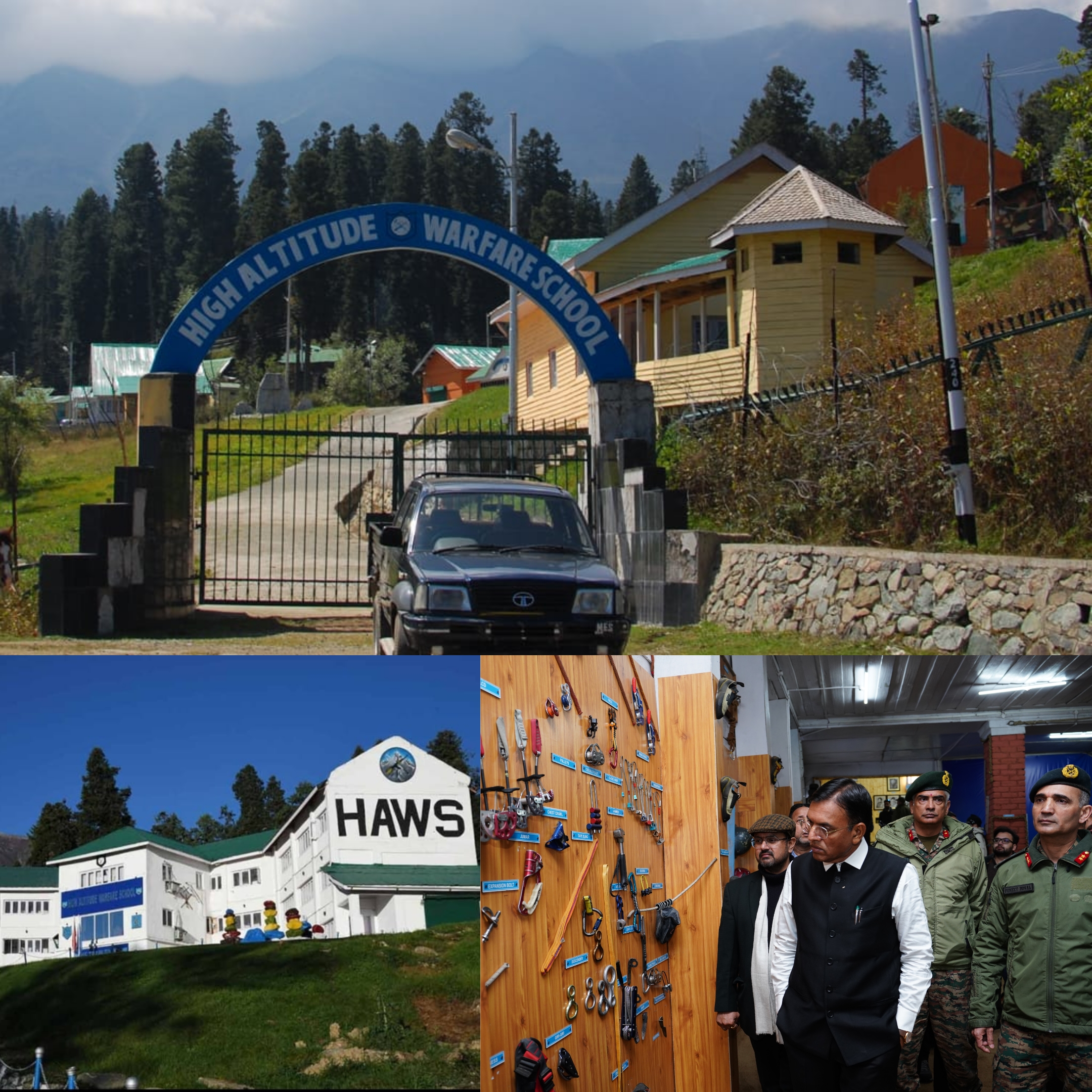
Perched at nearly 9,000 feet in the avalanche-prone slopes above Gulmarg, HAWS, originally established in December 1948 as the 19 Infantry Division Ski School, has over the decades evolved from a combat necessity into India’s most reliable breeding ground for elite winter sports athletes. Founded by then Brigadier K S Thimayya, the school was upgraded in 1962 into a Category A training establishment, formalising its role in mastering high-altitude and snow-bound warfare.
During the KIWG held from February 23 to 26, athletes from the Indian Army, Central Reserve Police Force and Indo-Tibetan Border Police dominated Nordic skiing events, repeatedly crediting HAWS for their preparation. The Army swept multiple Nordic podiums, including a clean sweep in the men’s 10 km and 1.5 km sprint events, underlining the school’s growing influence on competitive winter sport.
The spotlight on HAWS intensified further with the visit of Union Minister for Youth Affairs and Sports Mansukh Mandaviya, who toured the facility on February 26 while attending the Winter Games in Gulmarg.
Athletes say the school’s rigorous winter warfare training has translated seamlessly into sporting excellence. Kajal Kumari Rai, a CRPF athlete from Shillong who had never seen snow before 2024, won gold in the Nordic women’s 15 km and 10 km events after a short but intensive training exposure at HAWS. She described the experience as transformative, saying the Army and HAWS gave her belief and direction.
Similarly, Bhavani T N, who clinched gold in the Nordic women’s 1.5 km sprint after earlier bronze finishes in longer events, traced her competitive edge to training stints at HAWS and the Indian Institute of Skiing and Mountaineering. Starting winter sport late in her career, Bhavani said the discipline and conditioning at Gulmarg helped her bridge the gap with international competitors.
According to Army officials, HAWS runs a highly structured athlete pipeline, training between 250 and 300 Army winter athletes annually, alongside a smaller number of civilian trainees. Athletes undergo at least 600 hours of training each year across Alpine, Nordic and snowboarding disciplines, supported by ski simulators, roller skis for summer conditioning, high-altitude endurance training and a closely monitored nutrition and recovery regime.
Army team officials said expert coaches from Europe and Central Asia regularly assist in sharpening technique to international standards, while the natural advantage of altitude allows athletes to train year-round without disruption. Physiotherapists and sports scientists attached to the programme describe the infrastructure and support systems as comparable to Olympic training centres.
The impact of HAWS has extended beyond the Army, with CRPF and ITBP athletes also benefiting from access to coaching expertise, equipment and training methods developed at the school. CRPF officials said sustained collaboration with Army coaches over the past three years has begun to reflect in podium finishes at national competitions.
As the Winter Games concluded in Gulmarg, officials and athletes alike said the medals on display were only the visible outcome of a much longer process, forged away from public view in the unforgiving terrain of HAWS — where the demands of warfare training have quietly shaped India’s rise in winter sports.


Comments are closed.