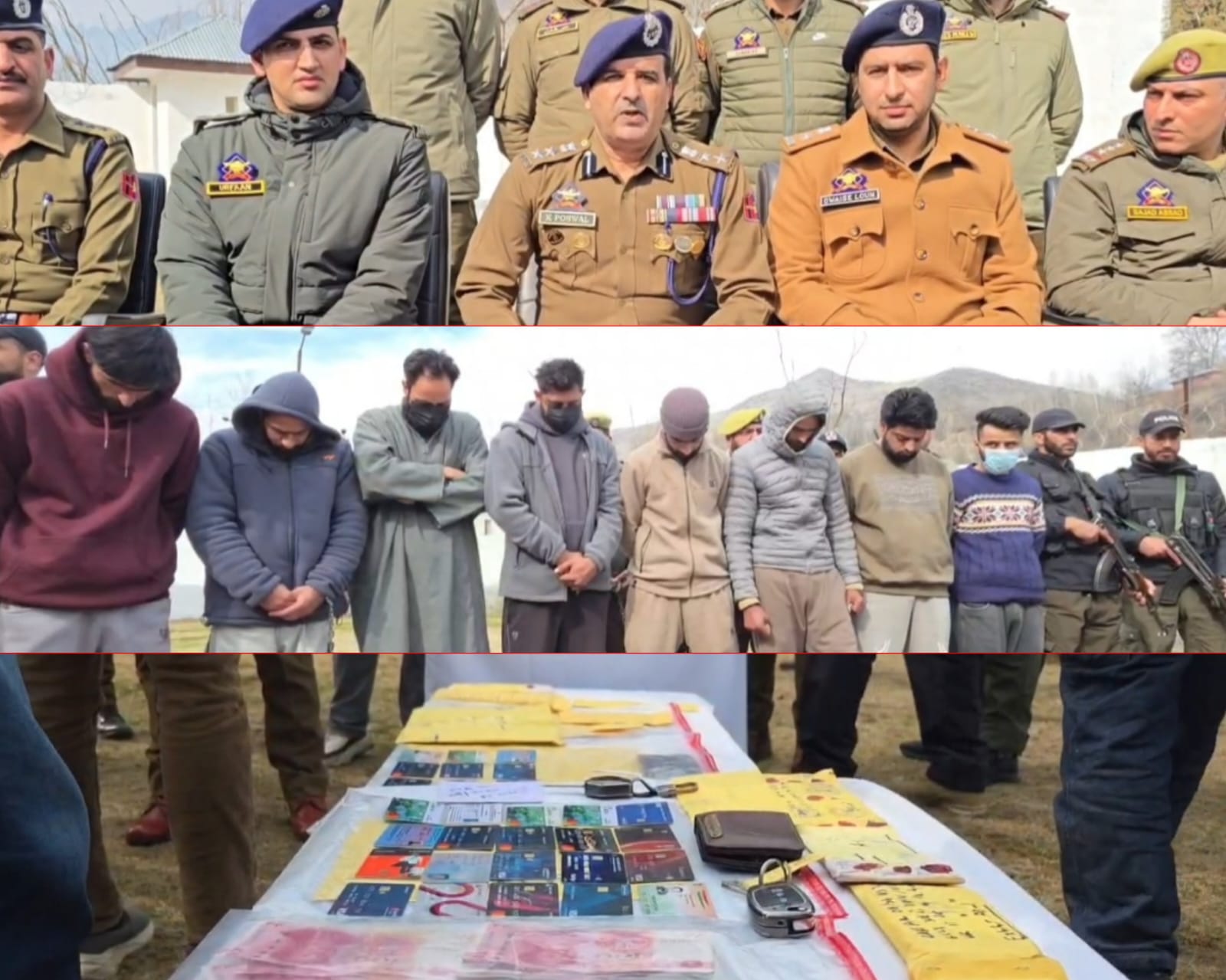

Glitter of Quick Wealth and the Trap Beneath

Ganderbal Online scam bust: Cyber Mirage

Majid Marouphay

“Polished websites, courteous voices, professional titles and promises of effortless prosperity created an illusion of legitimacy — but beneath the glitter lay a carefully engineered web of manipulation.”

In an age where dreams travel at the speed of a click, hope too has become vulnerable. For thousands of young graduates, struggling businessmen and families striving for a better tomorrow, the promise of a work-from-home job, a high-return investment or even a sponsored foreign trip feels like a doorway to dignity and stability. But what if that doorway opens not to opportunity, but to ruin? The recent exposure of a massive online investment scam in Kashmir is not just a crime story – it is a painful reminder of how ambition, trust and desperation can be weaponised in the digital era, leaving shattered savings and shaken faith in its wake. The unearthing of this huge online investment scam in Kashmir is not merely a police success story, it is a mirror held up to our society. It reflects our aspirations, our vulnerabilities and the dangerous allure of easy money in the digital age.

In one of the biggest cyber fraud crackdowns in the region, Jammu and Kashmir Police exposed a racket involving over ₹209 crore, a figure that may cross ₹400 crore as investigations progress. The case, investigated under the leadership of Senior Superintendent of Police (Ganderbal) Khalil Ahmad Poswal, led to the arrest of nine accused, including the alleged kingpin Ekant Yogdutt, a Haryana-based MBBS doctor known by the alias ‘Dr. Morphine.’

The details are chilling. Fake online investment platforms, glossy websites, Telegram groups, QR codes, layered bank transactions – everything designed with precision to deceive. Educated youth, aspiring job seekers, small traders and even professionals were promised extraordinary returns through coin trading and digital investments. Some were offered high-paying work-from-home jobs, others were tempted with dreams of foreign family trips and luxurious lifestyles.

The fraudsters were clever. They would initially credit small amounts into victims’ accounts to build trust. They spoke politely, appeared well-mannered, sometimes flaunted impressive professional credentials. But behind that polished exterior lay calculated manipulation. In fact, investigations have revealed the involvement of white-collar individuals including a doctor from Haryana and even a teacher from Baramulla. It is a sobering reminder that deception does not always wear a rough face, it often comes wrapped in respectability. Equally disturbing is the exploitation of the poor. BPL account holders were allegedly persuaded to ‘rent’ their bank accounts and ATM cards for a monthly payment of ₹8,000–10,000. These accounts then became conduits for crores siphoned from unsuspecting citizens across India. Money moved through multiple layers and even beyond national borders, erasing trails and complicating recovery.

But beyond the criminal sophistication lies a social question: Why do so many fall prey? The answer is uncomfortable. Unemployment, economic pressure, rising aspirations and the culture of instant success create fertile ground for such scams. When a young graduate receives a WhatsApp message promising ₹50,000 a month for simple data entry work, hope often overrides caution. When a small businessman sees screenshots of ‘guaranteed’ profits, prudence is replaced by possibility.

Online job scams today are disturbingly common. Fraudsters impersonate reputed companies, send fake offer letters without interviews, demand ‘registration’ or ‘training’ fees and harvest Aadhaar, PAN and banking details. Social media and messaging platforms have become hunting grounds where desperation is monetized. The red flags are well known – unrealistic returns, upfront payments, unsolicited job offers, urgent decisions, yet the glitter of quick money blinds many. In truth, no legitimate company charges for recruitment. No genuine investment promises extraordinary returns without risk. And no respectable employer recruits solely through Telegram messages and QR codes. This is where awareness must complement enforcement.

The Ganderbal Police, under the stewardship of Khalil Ahmad Poswal and his dedicated Special Investigation Team, deserve commendation for their professionalism and integrity in busting this complex racket. Their work sends a powerful message: cybercrime may be digital, but accountability is real. Their achievement stands as proof that law enforcement in Kashmir is evolving with technological competence and resolve.

Yet policing alone cannot solve the problem. Digital literacy must become a social priority. Families must educate their children about cyber risks. Educational institutions should include basic cyber awareness in curricula. Banks must tighten monitoring systems. And individuals must resist the temptation of shortcuts. Most importantly, we must shed the illusion that appearances guarantee honesty. A soft-spoken professional, a well-dressed consultant, a person with an impressive degree – none are immune from moral collapse. Trust, in the digital era, must be verified, not assumed.

The lesson from this multi-crore scam is simple but profound. Easy money is rarely easy and it is often not money at all but a trap. As citizens, especially as youth navigating an uncertain economic landscape, vigilance is our strongest defense. Before clicking a link, sharing bank details or investing hard-earned savings, pause and question. Because behind the glitter of online promises may lie a web of deceit carefully woven to exploit hope itself.

(The author is a teacher and can be reached at khanmarouphay@gmail.com)

Comments are closed.