Sustainable change rarely happens in isolation, particularly in a region shaped by complex social, economic, and geographical challenges. Since 2011, CHINAR International, a Kashmir-based social development organization, has been working to empower children, youth, and marginalized communities through a holistic approach revolving around Child Development, Quality Education, Youth Development, and Community Engagement. While CHINAR independently designs and implements its programs, it recognizes that long-term impact is significantly amplified through collaborations. By partnering with government departments, academic institutions, and civil society organizations, CHINAR expands both the reach and impact of its interventions across the region.
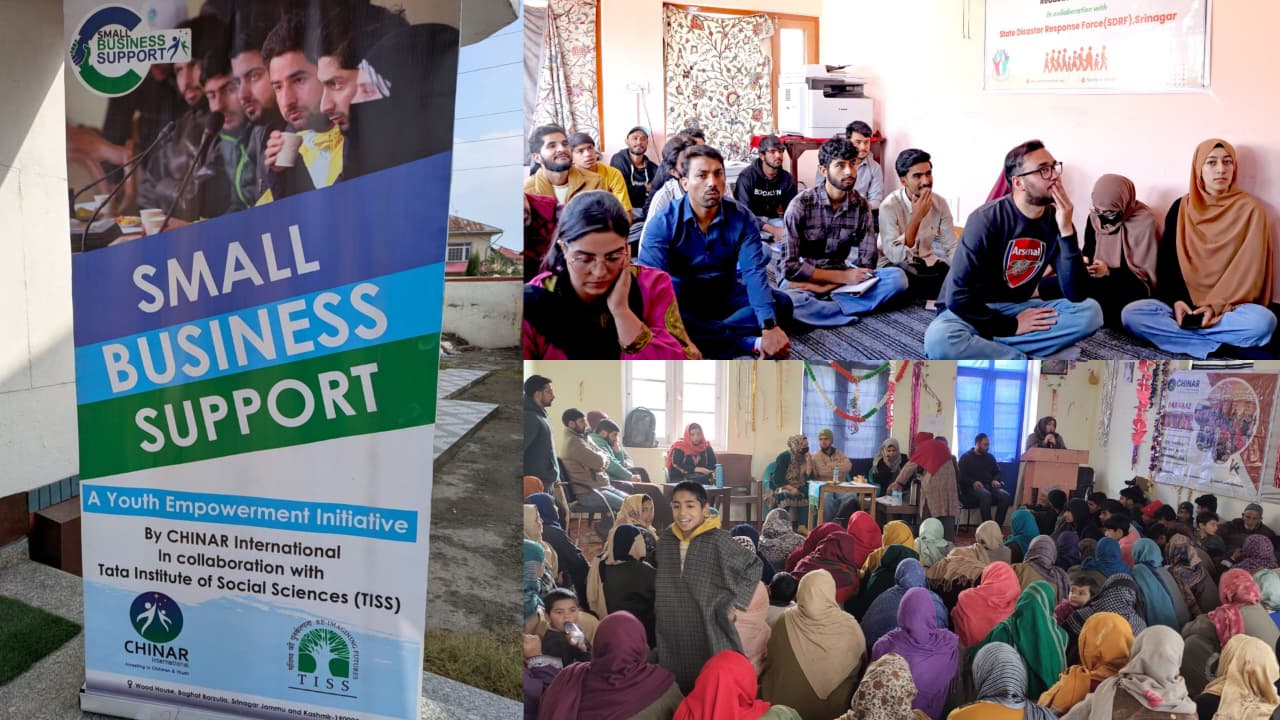
CHINAR’s Youth Development vertical offers a compelling example of how institutional partnerships can strengthen program outcomes. This is particularly evident in its Small Business Support Program, now in its sixth year. Designed to promote youth entrepreneurship, the program provides financial assistance and mentorship to young people with innovative business ideas who face economic constraints. The Tata Institute of Social Sciences serves as a key knowledge partner, offering technical guidance and playing a central role in beneficiary selection. The National Institute of Technology, Kashmir, and the Social Work Department at the University of Kashmir further reinforce the process by ensuring transparent, fair, and merit-based evaluations. Civil society partners such as ASSRA, Chotay Taray Foundation, and FFSN (Fortune Foundation for Special Needs) contribute to building a broader ecosystem of youth entrepreneurship, making the SBS Program one of CHINAR’s most successful collaborative initiatives.
Skill development remains a cornerstone of youth empowerment at CHINAR. The organization collaborates with the Small Industries Development Bank of India (SIDBI) as the sponsoring agency for a skill development project focused on Persons with Disabilities, under which 95 trainees have been enrolled. Access to higher education is further strengthened through partnerships with Ehsaas International and ASSRA under CHINAR’s Higher Education Scholarship and Career Support Programs. Currently, 94 students are enrolled in long-term academic programs, while an additional 374 students benefit from short-term professional and skill-based courses.
Collaboration is equally central to CHINAR’s Child Development Program, where education and health interventions intersect. In partnership with the Department of Health Services across all districts of Kashmir, CHINAR organizes annual medical camps for enrolled children and their families, many of whom live in remote areas with limited access to healthcare. These camps offer general health check-ups, growth and nutritional assessments, maternal and women’s health services, illness screening, and health awareness sessions. By deploying qualified medical professionals, the Health Department enables early detection and treatment of health issues that might otherwise disrupt children’s education and overall development.
Livelihood security is another critical determinant of child well-being identified by CHINAR. Many families enrolled under the Child Development Program rely on livestock such as cattle, sheep, and goats. To address low productivity caused by limited technical knowledge and inadequate animal healthcare, CHINAR collaborates with the Department of Animal and Sheep Husbandry. Together, they deliver targeted trainings on scientific livestock management, covering animal nutrition, disease prevention, vaccination, breeding practices, hygienic housing, and climate-resilient methods. Families are also guided on relevant government schemes and subsidies to strengthen their economic resilience.
Under the Community Engagement Program, CHINAR works closely with government and non-government partners to address the needs of women, children, the elderly, and other vulnerable populations. Collaborations with the Special Cell for Women, Women Helpline, Sankalp Hub for Empowerment of Women, and One Stop Centres ensure that women facing violence or economic vulnerability can access legal aid, counselling, medical care, shelter, and livelihood opportunities. Partnerships with the Family Planning Association of India, Srinagar, and SKY Trust, Baramulla, support reproductive health services, adolescent health education, menstrual hygiene awareness, and gender sensitization initiatives.
CHINAR’s collaborative footprint also extends to social protection. Partnerships with the Social Welfare Departments of Baramulla and Shopian facilitate access to welfare schemes for eligible families. Collaboration with the Handicrafts Department, Baramulla, supports artisans by preserving traditional skills and strengthening market linkages. Humanitarian partnerships with Humanity Welfare Organization and Humanity The Ultimate Faith enable emergency assistance, livelihood support, disability inclusion, and education services across multiple districts. To enhance disaster preparedness, CHINAR works with the State Disaster Response Force to train youth in Disaster Risk Reduction.
Health outreach further includes elderly care implemented in partnership with GK Labs and Moul Mouj Foundation. Mental health support is delivered through collaborations with Médecins Sans Frontières, Kashmir Lifeline, and the Department of Health. For child protection, CHINAR partners with Childline in Kulgam and Anantnag, Child Welfare Committees in Shopian, Anantnag, and Kulgam, the Juvenile Justice Board in Shopian, and district-level Child Protection Services. Health-focused collaborations with the Rashtriya Bal Swasthya Karyakram ensure early screening, referral, and follow-up for childhood diseases and developmental conditions.
Similar to the Child Development Program, CHINAR’s Community Engagement program also extends livestock-related collaborations. Partnerships with the Veterinary Department in Baramulla and the Animal Husbandry Departments in Kulgam and Shopian combine technical training with veterinary outreach and animal healthcare services. CHINAR also collaborates with the Agriculture Department, Krishi Vigyan Kendra Shopian, the Irrigation Department Baramulla, and the Manzgam Farmers Association to promote awareness, technical training, and sustainable agricultural practices. Additionally, partnerships with the Education Department support a range of awareness programs and community-based educational sessions.
When it comes to CHINAR’s Quality Education program, partnerships with diverse organizations have been instrumental in strengthening educational outcomes for vulnerable children in Jammu and Kashmir. The team currently engages 94 community-level facilitators across its Community Learning Centers (CLCs), of which 15 centers receive critical support from the Wipro Foundation. Since the inception of this partnership in 2022, Wipro has contributed significantly to improving program delivery and effectiveness.
The Bookworm Workshop, conducted in collaboration with the Wipro Foundation, has been a transformative initiative that laid the foundation for the Quality Education’s Reading Corner Program. Through this partnership, the Wipro Foundation has provided strategic guidance and essential resources that have shaped the team’s programmatic approach.
The Quality Education team works closely with the Directorate of School Education Kashmir (DSEK) to strengthen teaching and learning in government schools, in line with state priorities and the NIPUN Bharat Mission. Through this partnership, CHINAR co-implemented the 100 Schools Fellowship Program, which focuses on improving classroom practices, building teacher support systems, and enhancing student learning. Teachers and Heads of Institutions receive targeted virtual and in-person training as part of the program.
CHINAR was also selected under the TFIx (Teach For India x) entrepreneurship program, which supports organizations adapting the fellowship model to local contexts. This provided CHINAR with guidance on leadership development, mentoring, and reflective practices, helping tailor the model to the realities of Jammu and Kashmir and ensure strong links with government schools and community learning spaces. To further improve classroom engagement, CHINAR partnered with organizations such as Jod Gyan, Avishkaar, and Samitshalla to source and adapt high-quality Teaching–Learning Materials (TLMs), strengthening its overall teaching approach.
Across all its programs, CHINAR International demonstrates that collaboration is not merely a strategy but a core value. By aligning community needs with institutional expertise, government systems, and civil society innovation, CHINAR creates integrated solutions that are scalable, inclusive, and sustainable. In a region as complex as Kashmir, these partnerships transform individual interventions into collective impact, ensuring that children, youth, and communities are empowered to thrive with dignity and opportunity.


Comments are closed.