
Beyond Carpets and Chandeliers: Rethinking the Role of Masjids

Malik Nazir

“While Masjids grow more comfortable, families nearby often struggle for even basic medical support, and this contrast demands introspection.”

Over the last few decades, Masjids across Kashmir have witnessed visible change. Beautiful woodwork, improved lighting, quality carpets, sound systems, and now air conditioners have become common.These developments are encouraging and, from a religious perspective, neither wrong nor prohibited. Comfort helps worshippers especially elders and the sick to offer prayers with ease. The goodwill and sincere intentions behind these improvements cannot be denied.

Yet, if we look back even twenty years, Masjids were much simpler. Facilities were limited, but faith was deep and sincere. Going further back to the time of our elders and ancestors, many offered prayers without even basic comforts but their connection with Almighty was strong. Their focus was on sincerity, not surroundings. Today, the faith and connection remain the same; the difference lies only in the facilities.

A recent incident forced me to reflect deeply on this contrast. I came across an urgent appeal for an oxygen concentrator for a critically ill patient. Despite contacting many people, we could not arrange one in time. The experience was painful and disturbing. It made me think about the comfort we enjoy inside Masjids while families living nearby struggle for even basic medical support.

This reflection is not against improving Masjids. Rather, it is a call to broaden our understanding of their role. Prayers can be offered on a simple mat and will still be accepted. Comfort may help, but it does not define devotion. At the same time, saving a human life or easing someone’s suffering carries immense religious and moral value.

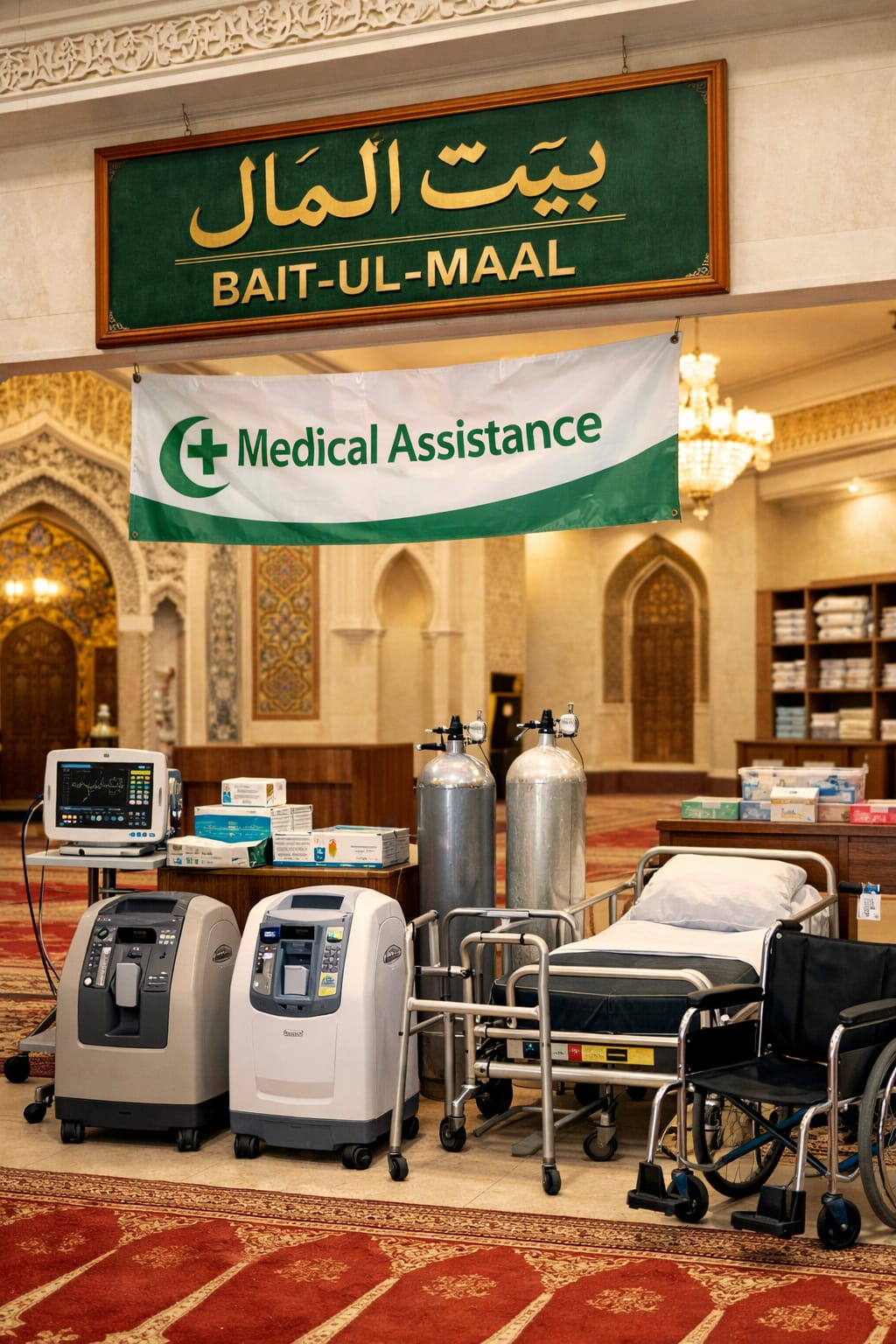
Masjids with stable income can consider keeping basic emergency medical facilities for the local community, such as an oxygen concentrator or some other essential medical equipments. These arrangements can prove lifesaving in emergencies, particularly in rural and semi-urban areas. Such initiatives would also ease the burden on already overloaded hospitals, where beds, oxygen, and staff are often stretched beyond capacity. Community-level support can serve as the first line of help before a patient reaches a hospital.

There is also an important role for those associated with the medical profession. Doctors, nurses, pharmacists, and health workers within the community can voluntarily guide, monitor, and support such initiatives at the Masjid level. Their involvement would ensure proper use, timely response, and public confidence. Healthcare should not remain confined to hospitals alone; it must be shared as a collective community responsibility.

Beyond medical assistance, Masjids can support verified poor patients, help deserving students, and assist families struggling with basic needs.

Bait-ul-Maals already exist in most of the places, but the real need is to strengthen and organize them better. In areas with multiple masjids, a cluster system can be introduced where one masjid takes the lead in coordinating welfare and social support activities. At the same time, Imams must be given respectable and sufficient salaries so they can serve with dignity and devote themselves fully to their responsibilities. Such steps will not reduce the sanctity of masjids; instead, they will revive their original spirit as places of faith, care, and community service. Historically, masjids served not only for prayer but also for learning, shelter, and social support.Restoring this role is a return to tradition, not an innovation.

The younger generation has an important role to play. With respect and humility, they can place these ideas before elders and masjid committees. This should not be a matter of criticism, but cooperation. Elders bring wisdom; youth bring energy. Together, meaningful change is possible.

We already see many charitable trusts in Kashmir running ambulances, oxygen banks, and medical aid services. If such organizations can shoulder this responsibility, Masjids with healthy finances can also contribute in limited but meaningful ways. The aim is not to turn places of worship into hospitals, but to make them sensitive and responsive to the suffering around them.

Faith is not measured by decoration alone. Carpets and lights beautify spaces, but compassion gives them life. When a needy person is helped or a family finds relief in crisis, the reward is immense.

What we need is not more money, but better priorities. A small shift in thinking can transform Masjids into stronger centers of both worship and welfare. This is a humble appeal for reflection because alongside prayer, serving humanity remains one of the highest expressions of faith. The true beauty of a Masjid should be reflected not only in its architecture, but in the lives of the people who live around it.

The author can be reached at maliknazir.a@gmail.com

Comments are closed.