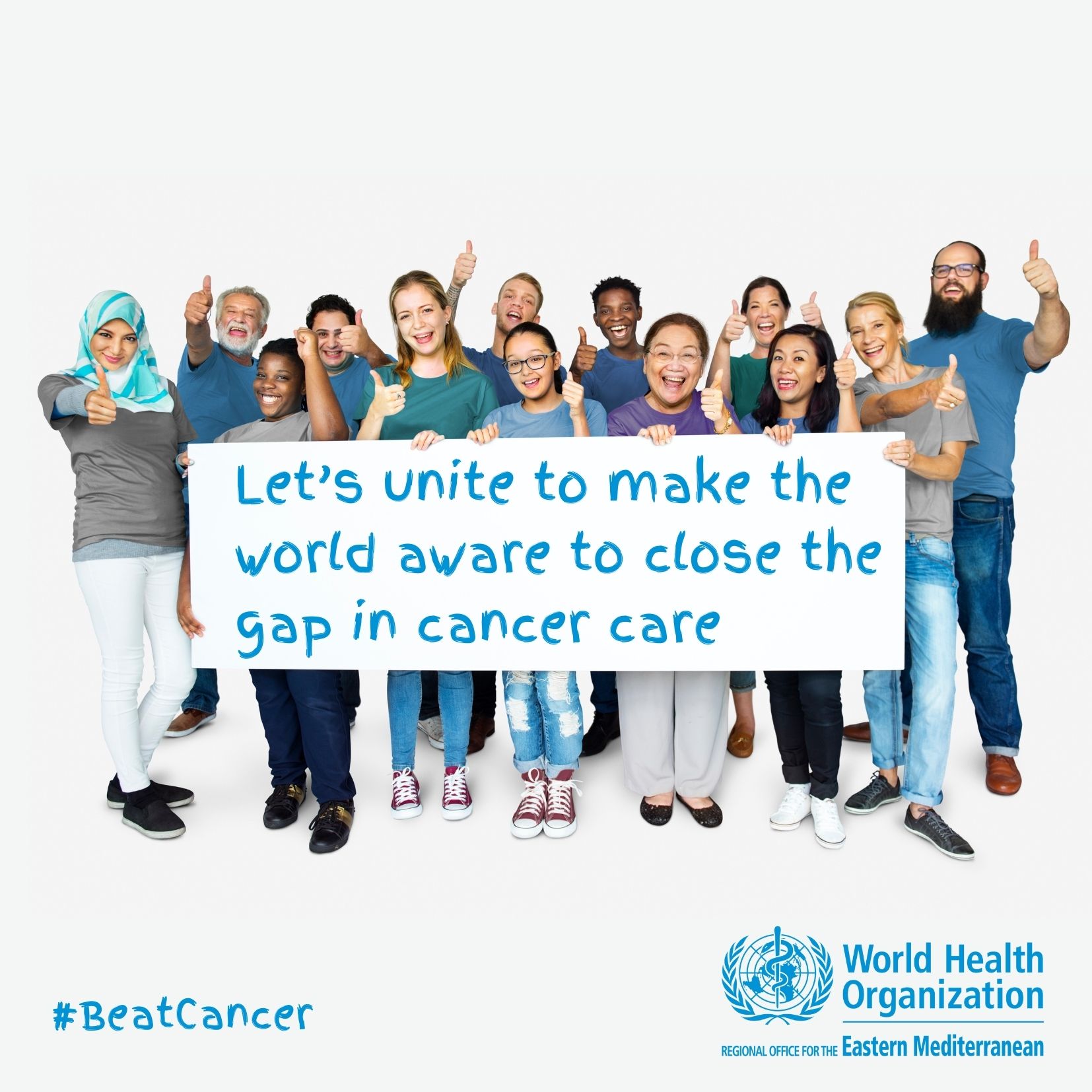

WHO calls for action on Cancer Prevention, Child Nutrition and Emergency Care

Mohammad Hanief


“Tobacco, infections, alcohol use, obesity, air pollution, and physical inactivity continue to drive millions of avoidable cancer diagnoses each year.”

The World Health Organization (WHO) has issued a series of urgent warnings highlighting how preventable diseases, poor nutrition and underfunded health systems are converging into a global health crisis, placing millions of lives at risk. New analyses released ahead of World Cancer Day, alongside updated guidance on school food environments and a global humanitarian appeal for 2026, underscore the need for coordinated international action to address health threats before they escalate further.


At the centre of WHO’s warning is the finding that up to four in ten cancer cases worldwide could be prevented. A major global analysis conducted with the International Agency for Research on Cancer (IARC) estimates that 37 per cent of all new cancer cases in 2022—around 7.1 million diagnoses—were linked to preventable causes. Drawing on data from 185 countries and 36 cancer types, the study provides the most comprehensive assessment to date of how behavioural, environmental, occupational and infectious risks continue to drive the global cancer burden.


Tobacco use remains the leading preventable cause of cancer globally, responsible for 15 per cent of all new cases, followed by infections at 10 per cent and alcohol consumption at 3 per cent. Other major contributors include high body mass index, physical inactivity, air pollution and exposure to ultraviolet radiation. For the first time, the analysis incorporates nine cancer-causing infections, highlighting the critical role of vaccination and infection control in cancer prevention.


Three cancers—lung, stomach and cervical—accounted for nearly half of all preventable cancer cases worldwide. Lung cancer was largely linked to smoking and air pollution, stomach cancer to infection with Helicobacter pylori, and cervical cancer overwhelmingly to human papillomavirus (HPV). Despite the availability of effective preventive tools, including tobacco control measures, vaccines and screening programmes, these cancers continue to claim lives, particularly in low- and middle-income countries.


The burden of preventable cancer was found to be significantly higher among men than women, with 45 per cent of new cancer cases in men linked to avoidable causes compared with 30 per cent in women. Regional disparities were also pronounced, reflecting differences in exposure to risk factors, socioeconomic development, health policies and system capacity. These findings reinforce the importance of prevention strategies tailored to national and regional contexts rather than uniform global solutions.


At the same time, WHO has drawn attention to another growing health challenge with long-term consequences: poor nutrition among children. In newly released guidelines on healthy school food environments, the organization warns that unhealthy diets are accelerating a global rise in childhood overweight and obesity, even as undernutrition continues to affect millions. In 2025, an estimated 188 million school-aged children and adolescents were living with obesity worldwide, representing roughly one in ten children and, for the first time, exceeding the number of children who are underweight.


This dual burden of malnutrition poses serious risks to physical health, cognitive development and educational outcomes, while increasing vulnerability to noncommunicable diseases later in life, including cancer, diabetes and cardiovascular disease. WHO argues that schools represent one of the most powerful settings for early intervention, as children spend a significant portion of their formative years there and often consume at least one daily meal at school.


Globally, around 466 million children receive meals through school feeding programmes each day, making them among the largest public nutrition interventions in the world. However, WHO notes that the nutritional quality of school meals varies widely and is frequently undermined by the widespread availability of foods high in sugar, salt and unhealthy fats sold in school canteens, vending machines and nearby outlets. These environments often normalize unhealthy eating patterns and make nutritious choices less accessible.


The new guideline calls for a comprehensive, whole-school approach to nutrition, covering all foods and beverages available during the school day. It emphasizes the need for mandatory nutrition standards aligned with national dietary guidelines, restrictions on the marketing of unhealthy foods to children, and supportive measures that make healthier options more attractive and affordable. WHO also highlights the importance of nutrition education and coordinated action across sectors, including health, education, agriculture and local government.


Equity is a central concern in the guidance. Children from low-income and marginalized communities are often the most reliant on school meals for daily nutrition and the most exposed to unhealthy food environments. Improving the quality of school food in these settings can reduce health disparities while supporting learning, attendance and long-term well-being. WHO frames investment in healthy school food not only as a health measure, but as a social and educational intervention with lasting benefits.


These warnings come as health systems worldwide are under increasing strain from conflict, climate change and recurring disease outbreaks. Reflecting this pressure, WHO has launched its global health emergency appeal for 2026, seeking nearly US$1 billion to support essential health services for people affected by humanitarian crises. The appeal aims to respond to 36 emergencies worldwide, including 14 classified as Grade 3, the highest level of organizational response.


In 2025, humanitarian funding fell below 2016 levels, leaving WHO and its partners able to reach only about one-third of the 81 million people initially targeted for health assistance. Despite these constraints, emergency funding enabled support for around 30 million people, including life-saving vaccinations for 5.3 million children, more than 50 million health consultations, support for over 8,000 health facilities and the deployment of nearly 1,400 mobile clinics.


For 2026, priority emergency settings include Afghanistan, the Democratic Republic of the Congo, Haiti, Myanmar, the occupied Palestinian territory, Somalia, South Sudan, Sudan, the Syrian Arab Republic, Ukraine and Yemen, alongside ongoing outbreaks of diseases such as cholera and mpox. As the lead agency for health response in humanitarian settings, WHO coordinates more than 1,500 partners across 24 crisis contexts, focusing on keeping health facilities operational, delivering emergency medical care, preventing outbreaks and restoring routine immunization.


WHO has emphasized that the challenges highlighted in its recent releases are deeply interconnected. Poor nutrition in childhood increases the risk of obesity and noncommunicable diseases later in life, including preventable cancers. Weak prevention policies and under-resourced health systems leave populations more vulnerable to disease, while humanitarian crises further disrupt access to care, vaccination and early diagnosis.


Early, predictable investment in health—whether through cancer prevention, healthier food environments or emergency preparedness—is repeatedly identified as one of the most cost-effective ways to save lives, reduce long-term costs and build resilience. Prevention and preparedness, WHO argues, are no longer optional priorities but essential pillars of global health security.


As the world marks World Cancer Day and confronts widening health inequalities, WHO’s message is clear: many of today’s most serious health challenges are preventable, but only if governments act decisively. Strong tobacco control, vaccination against cancer-causing infections, healthier school food systems and sustained support for emergency health responses together form a roadmap for protecting current and future generations. Without coordinated global action, the cost will be measured not only in rising disease and death, but in lost human potential and deepening inequality.


The author is a senior analyst and can be mailed at m.hanief@gmail.com

X/Twitter: @haniefmha

Comments are closed.