“Marks were never meant to carry such destructive weight; they are limited indicators, not life judgments.”
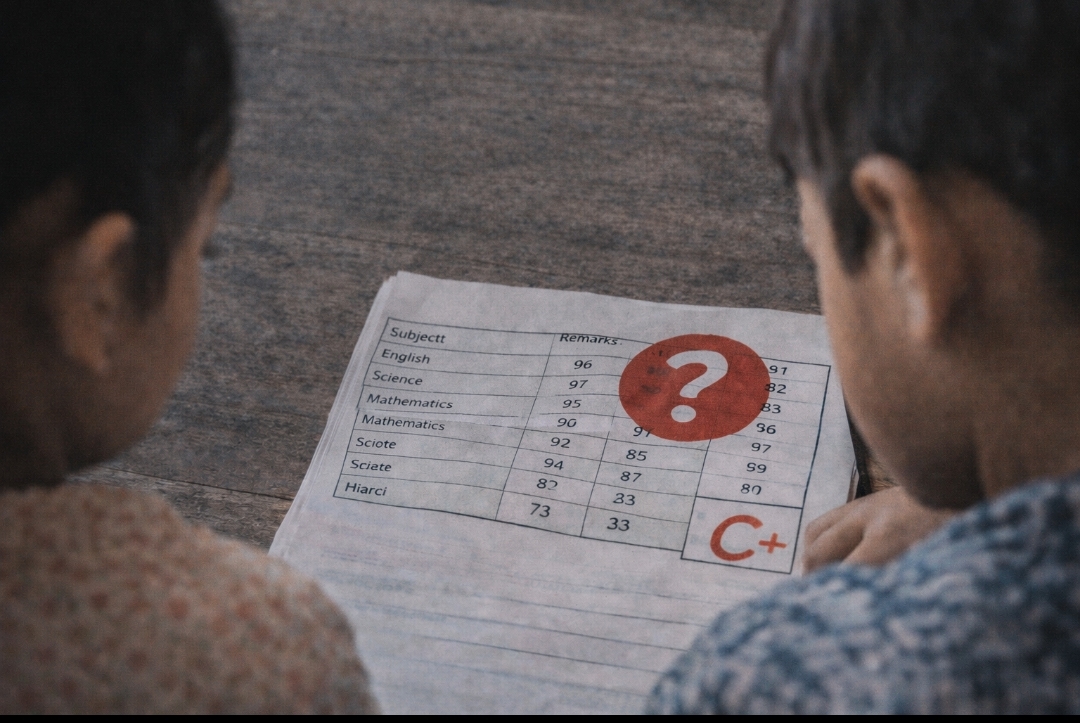
The announcement of the Class 11 board results has once again highlighted society’s deep-rooted obsession with marks and grades as the sole measures of a child’s worth. What should have been a routine academic milestone instead became an emotional trial for thousands of families.
While some households celebrated success, others experienced silence, disappointment, and quiet distress : a clear reflection of how closely academic scores are linked to a child’s perceived value in our social mindset.
More than a century ago, Albert Einstein wrote to his son, “Don’t worry about your marks. It is not necessary to have good marks in everything.” His words were not advice to ignore learning, but a reminder that scores and understanding are not the same. Today, that message feels painfully relevant. Academic marks have become the dominant; often the only, measure of a student’s ability, worth, and future.
Fortunately, the Class 11 board results did not bring reports of tragedy, unlike the recently declared Class 10 and Class 12 results, in which a student from Doda reportedly lost his life. Such incidents serve as painful reminders that results often carry consequences far beyond academic outcomes. Each year, board results are accompanied not only by report cards but also by heartbreaking accounts of young lives lost under overwhelming pressure.
According to the National Crime Records Bureau (NCRB), nearly 13,000 students die by suicide every year in India, with examination fear, academic setbacks, and performance anxiety among the major contributing factors. These figures are more than statistics; they point to a deep structural crisis in how education is structured, experienced, and valued in society.
Marks were never meant to carry such destructive weight. They are limited indicators of performance in a specific academic exercise conducted under particular conditions. Yet society has turned them into final verdicts on intelligence and success.
Education has been transformed into a relentless race where learning becomes secondary and survival seems conditional upon grades. When achievement is reduced to numbers, education loses its human soul and becomes a mechanical competition.
This marks-centered culture is evident in everyday life. In countless households, the announcement of results is quickly followed by familiar questions such as, “How many marks did your child score?” Though often asked casually, such questions reveal a mindset that places greater value on numbers than on effort, growth, creativity, or emotional well-being. Over time, this attitude encourages children to associate their self-worth with percentages, ranks, and comparisons rather than with curiosity, resilience, and personal progress.
Einstein’s message was a caution against mistaking scores for true understanding. When marks become the primary focus, learning often turns into rote memorization: absorbing answers, reproducing them in examinations, and forgetting them soon afterward. While this approach may yield high scores, it does little to develop critical thinking, creativity, or the ability to apply knowledge meaningfully in real-life situations.
The public celebration of high achievers and the intense media attention surrounding examination results in Jammu and Kashmir highlight how deeply marks have become linked to a child’s sense of self-worth. While appreciation at the school or home level can encourage and motivate students, turning results into large public celebrations often harms those who fall behind or score lower than expected.
For many children, poor marks bring shame, comparison, and silence instead of the support they need. When a single examination is treated as a final judgment on a child’s future, it reflects not the failure of one student, but a broader failure of society and an education system that has allowed marks to matter more than lives.
The Supreme Court of India has also acknowledged this reality, describing student deaths linked to exam pressure as a “system failure” caused by the absence of adequate emotional and institutional support, particularly within highly competitive academic environments. Such observations underline the urgent need to rethink how success is defined.
A marks-centric system ignores the broader dimensions of human development. Skills like creativity, collaboration, adaptability, communication, and problem-solving cannot be measured by a single examination, yet they are essential for professional success. Research even shows that high academic scores are poor predictors of workplace effectiveness.
A 2024 study in the Journal of Applied Psychology found that academic marks explain only about 4–5 percent of the variation in actual job performance ; highlighting the gap between exam success and real-world competence.
Globally, alternative education models offer valuable insights. Countries such as Finland place less emphasis on standardized testing and mark sheets, and instead prioritize descriptive feedback, teacher autonomy, and student well-being.
Learning is regarded as a continuous process that fosters holistic development, rather than a competition for marks and grades. This approach demonstrates that reducing pressure and fostering trust between students and teachers can enhance learning outcomes rather than weaken them.
India’s National Education Policy (NEP) 2020 also acknowledges the urgent need for change. It advocates moving away from high-stakes examinations toward competency-based assessments and continuous formative evaluation. The policy places strong emphasis on social-emotional learning and mental health, recognizing that education must prepare children for life, not merely for examinations.
However, policies alone cannot bring about meaningful change; a true transformation requires a shift in societal mindset. As long as marks continue to be regarded as the primary measure of success in homes, schools, and public discourse, the pressure on children will persist, and genuine learning will continue to suffer. Parents, teachers, and communities must consciously reconsider how they discuss results. Rather than asking, “How much did you score?” we should ask, “What did you learn?” or “Where do you need support?”
These small shifts in approach send a powerful message: effort matters, growth matters, and the child matters more than the score. Schools, too, must move beyond rank-based recognition and foster environments where creativity, kindness, teamwork, and resilience are valued. Emotional support systems, counselling services, and open discussions about failure should become integral to everyday educational culture, rather than being treated only as responses to crises.
Most importantly, children must grow up understanding a simple truth: no single exam, or result can measure their worth or define their future. Marks are meant to provide feedback, not pass judgment. Einstein recognized that learning is a lifelong journey, not a number on a marksheet. In an age where machines can process information far faster than humans, the true purpose of education is to cultivate curiosity, empathy, and wisdom.
If we are genuinely committed to the well-being of our children and the vision of NEP 2020, we must move beyond blind faith in marks and ensure that no child ever feels that their life is worth less than an examination result.
The writer is a teacher based in Arin, Bandipora. He can be reached at njfirdous090@gmail.com


Comments are closed.