

Firdous Ahmad Najar
“The prevailing education system continues to be driven not by what children truly learn, but by what is finally assessed. As long as assessment remains dominated by rote memorisation, teaching will revolve around exams, students will study for marks, and genuine learning will remain secondary.”
The National Education Policy (NEP) 2020 marks a historic shift in India’s educational vision. It strongly advocates a system of learning that ensures the holistic development of every child: intellectual, emotional, social, physical, and ethical. The policy outlines progressive strategies and pedagogies that move beyond textbook-centred instruction and aim to nurture creativity, critical thinking, problem-solving ability, and life skills. However, despite this visionary framework, the reality of classrooms today tells a different story. The prevailing education system continues to be driven not by what children truly learn, but by what is finally assessed; and unfortunately, assessment in its current form remains dominated by rote memorization.
At present, summative or final assessments largely determine the academic fate of students, especially in board examinations. These assessments often test the ability to reproduce information rather than the capacity to understand, apply, analyse, or create. As a result, students who may possess deep conceptual clarity, practical intelligence, and creative potential mostly remain disadvantaged, while those skilled in memorisation excel. This mismatch between learning and evaluation has created a dangerous imbalance in the system: teachers teach for exams, students study for marks, and real learning becomes secondary.
This distortion is one of the main reasons why an increasing number of students and parents are turning towards private coaching centres instead of relying on formal schooling. Coaching institutions do not necessarily provide better education, but they are highly aligned with the demands of memory-based testing, which is prevalent in current examination patterns. When success is defined by scores rather than skills, families naturally seek environments that maximise exam performance, even if it means sidelining holistic development. Consequently, schools lose their central role as spaces for meaningful learning and become mere formalities in a system dominated by assessment outcomes.
At a deeper level, this culture of assessment has reshaped how students understand success itself. Success in studies is no longer seen as the ability to think independently, understand problems deeply, or apply knowledge meaningfully; instead, it is measured mainly through long study hours and high scores. Yet true academic success depends equally on how students reason, analyse, and transfer learning to new contexts. Unfortunately, these abilities receive little systematic attention in most classrooms. Even when teachers attempt to emphasise them, students often do not practise these skills because they do not see them as aligned with the prevailing memory-driven examination system. As a result, learners focus narrowly on what is required to pass exams and secure marks, rather than on developing genuine understanding.
Research consistently shows that students who build strong cognitive skills: such as critical thinking, problem-solving, and reflective learning; find it easier to grasp new subjects, adapt to academic challenges, and respond effectively to real-life situations. These capacities prepare learners not only for examinations, but also for responsible citizenship and lifelong learning. However, when such skills remain marginal in assessment, they also remain marginal in classroom priorities.
NEP 2020 clearly recognises this crisis and has provided one of the strongest policy mandates for transforming assessment in India. It expands the scope for competency-based assessment (CBA) and school-based assessment (SBA) through initiatives such as the 360-degree holistic progress card and PARAKH, envisioned as a replacement for traditional marksheets and standardized tests. The policy has also initiated long-overdue reforms in board examinations by making them modular, low-stakes, and flexible; offered twice a year, while balancing objective MCQs with descriptive and analytical questions. These measures signal a decisive shift in intent: from testing memory to nurturing meaningful learning.
Yet, despite these progressive frameworks, the ground reality remains deeply constrained by implementation challenges. Acute shortage of resources, gaps in institutional capacity, and the lack of sustained professional training in assessment design continue to limit the impact of these reforms. Most teachers have not received adequate support to develop or use tools aligned with competency-based education, nor to design assessments that genuinely evaluate understanding, application, and higher-order thinking; particularly in board examinations, which are often seen as the sole indicators that decide the future learning paths of children.
In many cases, reforms have been reduced to cosmetic changes: a few new question formats or altered paper patterns, without addressing the deeper issue of how learning is understood, nurtured, and evaluated in classrooms. The result is a system that speaks the language of innovation but continues to operate with the logic of memorization. As a consequence, the system remains largely trapped in a marks-driven, textbook-centred examination culture that values recall over reasoning and repetition over reflection.
This misalignment has far-reaching consequences. Teachers, burdened by rigid syllabi and performance pressures, continue to focus on syllabus completion rather than learner development. Students, sensing that success depends more on exam strategies than real learning, increasingly turn to private coaching centres: often hubs of rote learning, at the cost of meaningful engagement in schools. Professional development for teachers, meanwhile, remains largely theoretical and disconnected from classroom realities, insufficient to bring about real pedagogical change. Assessment practices, instead of supporting learning, stand isolated from daily teaching and have little relevance to students’ lived experiences.
The long-term effects of this systemic misalignment are now becoming clearly evident. We are producing graduates with degrees but without skills, certificates but without competence, and marks but without meaning. This has created a painful paradox: education is increasing unemployment instead of employability. Students leave institutions unprepared for real-world challenges because they were trained to remember answers, not to solve problems, collaborate, communicate, or innovate.
In this context, a powerful Urdu proverb captures the essence of our present dilemma: “Ek anaar, sau bemaar”: one pomegranate for a hundred patients. It aptly symbolises our education system, which produces graduates in lakhs every year, yet prepares only a limited few for scarce government jobs while leaving the majority without the competence and skills required for other sectors that could generate diverse employment opportunities. Under the influence of such an examination system, education ends up cultivating merely rote memorization, not scientific temper, technological awareness, or workplace competencies. Knowledge exists, policies exist, and intentions exist; but because assessment continues to reward rote performance rather than real understanding, these resources fail to translate into meaningful learning. The result is an education system that appears impressive on paper but remains deeply inadequate in practice.
However, the same proverb can take on a new meaning if we reverse our approach. If assessment is redesigned to genuinely nurture understanding, innovation, and real-world skills; rather than rote memorisation, the system can move from scarcity to abundance. Then, instead of “ek anaar, sau bemaar,” education can become “ek bemaar, sau anaar”: one learner supported by a hundreds of carrier opportunities. This reversal symbolises an environment in which students develop not only the ability to pass examinations, but also scientific thinking, technological competence, and the practical skills needed to thrive in contemporary society.
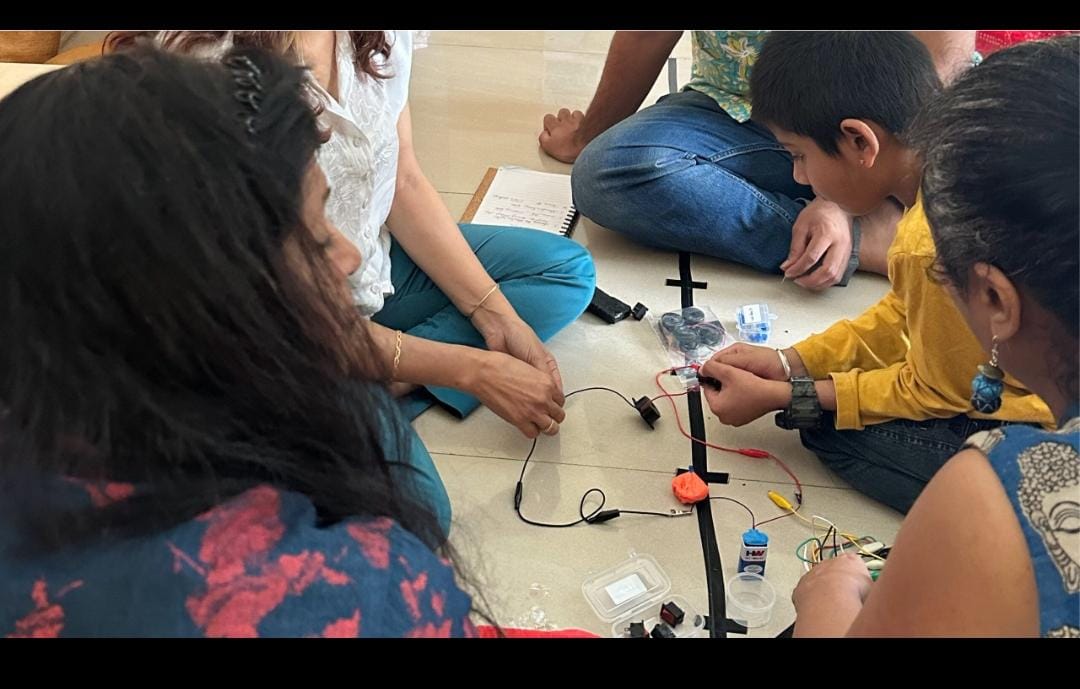
To achieve this transformation, assessment must move beyond written examinations. Portfolios, project-based learning, presentations, peer assessments, self-reflection, community engagement, and real-life problem-solving tasks must become integral parts of evaluation.
Teachers need training not only in teaching methods but also in assessment literacy: the ability to design tools that capture learning in its truest sense. Parents, too, must be sensitised to value growth and skills over mere marks.
Most importantly, students must feel that education is not a race for ranks but a journey of self-discovery. When children realise that their overall development is assessed and recognised, their motivation naturally increases. Such a system does not eliminate competition; rather, it replaces unhealthy pressure with meaningful aspiration.
In conclusion, NEP 2020 has already shown us the direction; the real challenge lies not in policy but in practice. Unless assessment reforms move beyond cosmetic adjustments and begin to genuinely prioritise competency, creativity, critical thinking, collaboration, and life skills, we risk locking an entire generation into low-skill, low-opportunity futures. However, the moment we redesign evaluation to honour every domain of human potential, education can transform; not only from “ek anaar, sau bemaar” into “ek bemaar, sau anaar,” but also from a culture of excessive coaching to meaningful formal schooling. It can become a system rich enough to heal, empower, and uplift every learner. Only then will education truly fulfil its promise: not merely to produce successful students, but to nurture capable, confident, and compassionate citizens.
The writer is a teacher and lifelong learner from Arin, Bandipora and can be mailed at njfirdous090@gmail.com
Comments are closed.