

Firdous Ahmad Najar
“Private tutoring, once remedial and occasional, has evolved into a full-fledged parallel education system. Fuelled by competition, exam anxiety, and commercial interests, it increasingly overshadows classrooms. In this process, education shifts from being a public good to a market-driven enterprise.”
In India today, education is increasingly being bought, sold, and measured: turning learning into a marketplace rather than a meaningful public endeavour. The country’s expanding tuition culture has commodified schooling, pushing families to spend more than ever on their children’s education, even as learning outcomes remain limited and uneven.
Private tutoring, once meant to offer occasional support, has steadily become the central symbol of academic seriousness and success. In the process, it has evolved into a parallel education system: fuelled by competition, exam anxiety, and commercial interests; often at the cost of genuine understanding, curiosity, and holistic development. This contradiction forces a troubling question: what this growing investment is really producing?
The rise of private tutoring reflects not confidence in learning, but fear of failure. Families are spending defensively, compelled by the belief that schooling alone is insufficient to secure academic survival. In this process, education is increasingly reduced to a race for scores, ranks, and certificates, while its human, social, and developmental purpose is steadily eroded.
Historically, private tutoring served a limited remedial purpose, helping students bridge learning gaps or cope with classroom difficulties. Over time, however, it has evolved into a large-scale commercial industry, generating revenues worth thousands of crores and projected to expand significantly in the coming years. In this process, education itself has been steadily commercialised, shifting away from its foundational character as a public good toward a market-driven enterprise.
Recent household expenditure data underscores the extent of this transformation. Evidence from the NSS 80th Round (Comprehensive Modular Survey) indicates that nearly one-third of students now rely on private coaching, with participation notably higher in urban areas than in rural ones. This reliance cuts across income categories and school types, signalling that private tutoring is no longer a supplementary or discretionary choice but an increasingly routine component of household education expenditure.
For students in government schools, annual spending on coaching often exceeds school fees and other education-related expenses accumulated over two to three years. For students in private schools, tutoring adds a substantial parallel financial burden. Unfortunately, the rapid expansion of coaching in recent years has resulted in its widespread perception as the primary indicator of academic achievement, thereby creating a significant barrier for many underprivileged students, who are consequently discouraged from exploring and pursuing diverse career pathways.
This diversion of household resources comes at a cost. Funds that could support nutrition, digital access, reading material, or savings are increasingly channelled into exam-oriented coaching and test preparation.
Today, many parents turn to tutoring not as a supplement to classroom learning but as a substitute marker of success itself. Coaching is increasingly seen as evidence of seriousness, ambition, and competitiveness, rather than as a means to deepen conceptual understanding. This shift has pushed the education system away from learning-centred values toward a rank-driven culture, fostering constant comparison and competition while gradually eroding its ethical and human foundations.
Even more concerning is the extensive spread of this competitive tuition culture into early childhood education, reflecting a serious erosion of educational wisdom. Kindergarten and pre-primary children are increasingly subjected to structured coaching and prolonged academic schedules.
The National Education Policy 2020 explicitly mandates that the foundational stage (ages 3–8) prioritise play-based, activity-oriented, and discovery-led learning, with minimal reliance on formal instruction. Developmental psychology strongly reinforces this position, demonstrating that young children learn most effectively through play, movement, social interaction, and sensory exploration rather than extended academic drills.
Nevertheless, many children are exposed to rigid tuition routines well beyond regular school hours, often extending past 4 p.m. Such early academic overload disrupts cognitive, emotional, and socio-behavioural development, elevates stress levels, and diminishes intrinsic motivation for learning. By displacing joy and curiosity with performance-driven pressure at the foundational stage, the education system risks long-term developmental harm, thereby undermining the holistic growth that NEP 2020 seeks to protect and promote.
Despite the vast scale and rising cost of private tutoring in India, credible evidence linking it to improved learning outcomes remains limited. Findings from ASER 2024, which assessed reading and arithmetic competencies among Grade 8 students, reveal no consistent correlation between higher participation in paid coaching and better academic achievement across states.
In several regions, high tutoring intensity coexists with low foundational competencies. This suggests that private tutoring, particularly in its exam-focused form, produces cosmetic academic gains rather than substantive learning. Families are investing in marks that project competition, not necessarily in knowledge that builds it.
Private tuition centres are structurally incapable of delivering holistic education. Human development requires sustained, day-long engagement supported by libraries, laboratories, playgrounds, peer interaction, co-curricular exposure, and emotionally responsive teaching; conditions that only schools can provide. Coaching centres, by design, reduce learning to short-term performance goals, reinforcing rote memorisation and exam strategies.
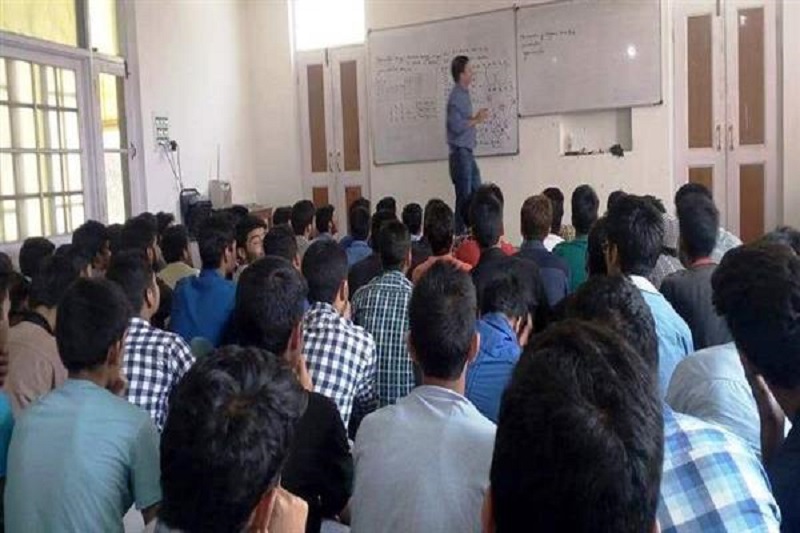
The tuition culture stands in direct contradiction to the vision of the National Education Policy 2020, which advocates a decisive shift from rote memorisation to competency-based learning. NEP 2020 emphasises play-way methods, activity-based learning, project work, and experiential pedagogy designed to address all dimensions of human development: cognitive, emotional, social, physical, and ethical. Such an approach cannot be realised within the exam-focused academic environment of tuition centres, typically confined to small rooms of limited dimensions, where a single tutor and a whiteboard serve as the sole learning facilities. This narrow instructional setup fundamentally restricts exploration, collaboration, creativity, and reflection, reducing education to content delivery rather than capability building.
A major driver of dependence on private tutoring is information gap. Parents often lack reliable and transparent indicators of school quality and student progress, which leads them to view tutoring as a necessary substitute for formal schooling. In this context, developing tools such as the School Education Quality Index and making them publicly accessible becomes crucial. A school-level learning outcomes index can help rebuild parental trust in the schooling system and, over time, reduce students’ dependence on private tuition.
The prevailing tuition culture, with its lack of a holistic educational approach, reinforces a narrow and exam-centric notion of success, largely focused on securing limited government or formal sector employment. As a result, a vast majority of students remain ill-prepared for livelihoods, entrepreneurship, self-employment, or the demands of a rapidly evolving economy.
There is an urgent need to realign school structures to restore trust in classroom-based learning and reduce the growing dependence on private coaching. Initiatives such as NIPUN Bharat seek to strengthen foundational literacy and numeracy through teacher capacity-building, structured pedagogy, learning recovery, and school-based assessments.
PARAKH complements these efforts by advancing assessment reform and benchmarking learning outcomes. When meaningfully embedded in everyday classroom practice, these initiatives can restore confidence in in-school learning and reduce the perceived need for private coaching as a parallel system.
At the same time, India’s challenge today extends beyond unemployment to the deeper issue of unemployability. Addressing this requires a decisive shift away from coaching-driven test performance toward skill development, creativity, adaptability, and problem-solving.
The establishment of the Ministry of Skill Development and Entrepreneurship, along with initiatives such as the Skill India Mission and PMKVY, marks important steps in this direction. Positioning schools as skill hubs: offering modular vocational courses and apprenticeship-linked training, can create credible and inclusive alternatives to private tutoring. In parallel, digital platforms such as the Skill India Digital Hub and PM e-Vidya can deliver structured academic and skill support at low cost, reducing dependence on tuition as a compensatory mechanism.
India’s education system stands at a critical inflection point. The unchecked growth of private tutoring has normalised competition without comprehension, expenditure without outcomes, and credentials without capability. While tutoring once promised upward mobility, it now increasingly mirrors systemic distrust in schools and deepens educational inequality.
The way forward lies not in expanding coaching markets, but in reclaiming schools as sites of meaningful learning and human development. As public skilling pathways and in-school reforms gain momentum, households can gradually shift from tuition-driven spending to capability-driven investment. This transition is essential if India is to transform its demographic scale into a resilient, skilled, and humane human capital base.
The writer is a teacher and lifelong learner from Arin, Bandipora. Contact: njfirdous090@gmail.com
Comments are closed.