
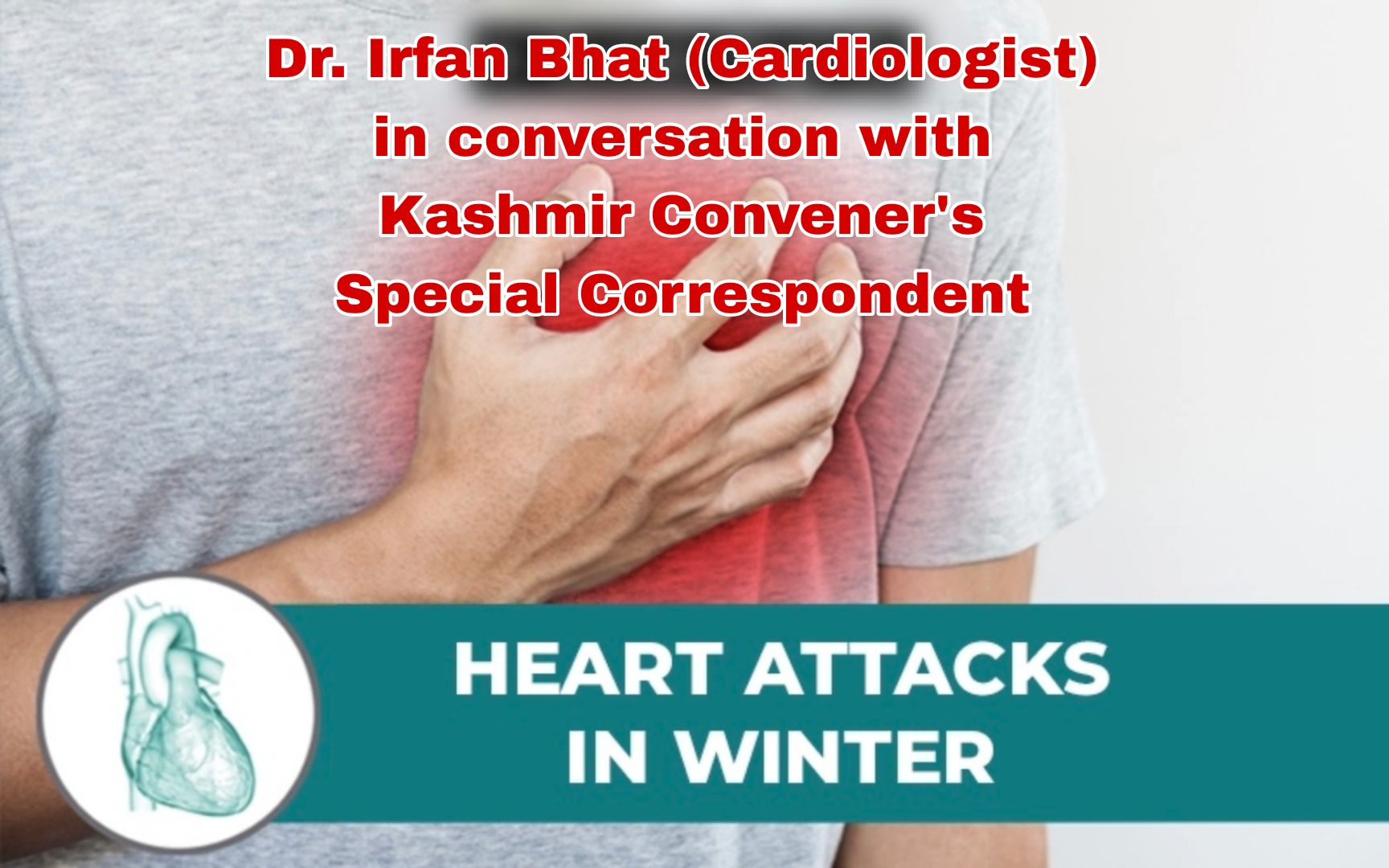
As Temperatures Drop, Heart Attacks Rise in Kashmir
Doctors warn cold weather, smoking, stress and poor BP control fuel winter heart attacks.

Suhail Khan
Srinagar, Dec 18: The harsh chill of winter does more than prompt extra layers of clothing. It places a formidable burden on the human heart, elevating pulse and blood pressure as the body labors to conserve heat. This seasonal shift brings grave, life-threatening hazards for individuals with cardiac conditions, extending well beyond commonplace winter ailments.
In a detailed conversation with Kashmir Convener, Dr. Irfan Bhat, a renowned cardiologist at Government Medical College, Srinagar, observed that the incidence of heart attacks consistently climbs during the colder period in Jammu and Kashmir. The winter months invariably show a worrying uptick in cardiac events compared to the summer season, he stated.
He said the cold imposes added strain on the cardiovascular system, heightening physiological stress. For those predisposed to heart disease, this additional demand can precipitate severe medical episodes.
Beyond the direct impact of low temperatures on blood pressure, Dr. Bhat identified a clear surge in heart attack cases each winter. He also singled out prevalent tobacco use as a major, modifiable risk factor aggravated during this time.
Dr. Bhat enumerated eight critical elements that elevate heart attack vulnerability.
Poor Glycemic Control: Unmanaged diabetes significantly amplifies risk, with patients often unaware of creeping sugar levels.
Unmanaged Hypertension: Inconsistent adherence to prescribed medication regimes leaves patients exposed. A common misconception, Dr. Bhat noted, is that high blood pressure medication can be stopped once readings improve, disregarding the need for often permanent therapy.
Heavy Tobacco Use and Adverse Cholesterol Levels: Elevated lipids, especially LDL cholesterol, contribute substantially to artery blockage.
These four, according to Dr. Bhat, form the core of heart attack etiology. Secondary yet potent factors are sedentary habits, a diet deficient in fruit and vegetable fibre, genetic predisposition, and psychological strain.
Mental distress has become a pervasive issue here, he remarked. Escalating stress correlates directly with increased cardiac risk. He expressed concern that more than half of his patients now present with depression and chronic anxiety, particularly among younger adults.
On the topic of seasonal infections, Dr. Bhat clarified that any illness, including influenza, raises the body’s metabolic demands for oxygen. This, combined with the general stressors of winter, can compromise cardiac function. A simple fever, he added, is enough to accelerate heart rate considerably.
Guidance for Prevention: Reiterating the timeless adage, Dr. Bhat emphasized proactive prevention. Patients with diabetes must understand the necessity of sustained treatment and monitoring. Rigorous blood pressure management is non-negotiable, and smoking cessation is critical, as a single cigarette can induce a dangerous pressure surge.
He recommended periodic cholesterol screenings and underscored the importance of daily physical exertion, such as a brisk half-hour walk. For seniors above 65, he specifically cautioned against the sharp cold of early mornings.
Psychological well-being is equally paramount. The trend of youth resorting to substances under duress is alarming. Actively reducing stress is not a luxury but a health imperative, Dr. Bhat asserted.
He advocated for a nutritious diet, warning against the regular consumption of processed and fast foods. A decline in physical activity invariably invites a rise in health complications, he cautioned.
As the valley endures another severe winter, medical professionals advise several practical steps for cardiac care including limit outdoor exposure during extreme cold and ensure indoor spaces are well-heated, engage in gentle, regular activity throughout the day, dress in insulated layers when venturing outside, include warm, hydrating fluids like broth in your diet, focus on meals abundant in winter greens, fresh produce, whole grains, and beneficial fats and eliminate tobacco use completely.
They also advise commitment to sustained exercise, balanced eating, and overall healthy practices in all seasons.
Notably, The drop in temperature presents a tangible threat to heart safety. As cardiac emergencies demand immediate intervention, public awareness of warning signs and seeking prompt medical attention is vital. Any delay in diagnosis or treatment can lead to severe outcomes or loss of life.
Comments are closed.