NEW DELHI, Dec. 08: A recently busted terror module based in Faridabad was established with the primary objective of executing a series of explosions in Delhi and surrounding areas besides concerted effort by the group to reignite separatist sentiments in Jammu and Kashmir, according to NIA investigation findings.
Sources indicate that separatist sentiment in the Kashmir Valley had declined significantly following the abrogation of Article 370, a trend attributed to increased inclusiveness and a crackdown on networks through multiple money laundering cases.
While Pakistan has persistently attempted to sustain terrorism in the region, intelligence assessments suggest it recognizes the crucial role of on-ground separatist leadership.
Historically, such figures propagated the ideology that fueled youth radicalization and militancy.
Consequently, Indian security agencies have prioritized countering separatism, given its intrinsic link to terrorist activities in the Valley.
A senior official involved in the Faridabad module investigation stated that enquiries revealed “serious attempts to resuscitate this separatist movement.”
Meanwhile, recent raids across Jammu and Kashmir have yielded incriminating materials, including literature from banned separatist organizations.
Mufti Irfan Ahmed, identified as the module’s mastermind, reportedly admitted during interrogation to active efforts aimed at reviving separatism. Law enforcement has recovered substantial evidence supporting this claim.
The alleged goal was to revert Jammu and Kashmir to the pre-2019 era, when separatist elements held significant sway.
These elements were instrumental in mobilizing youth towards armed militancy, organizing weekly protests, and encouraging large turnouts at terrorist funerals to glorify them as martyrs.
Officials noted that with the decline of the separatist ecosystem, recruitment into proscribed groups like Jaish-e-Mohammed, Lashkar-e-Taiba, and Hizbul Mujahideen has decreased considerably.
An Intelligence Bureau official explained to Kashmir Convener that eradicating separatism undermines the foundational ideology that incites youth violence.
The government has since emphasized channeling youth energy into constructive activities and has successfully revitalized the tourism sector.
The recent attack in Pahalgam is viewed as a failed attempt by Pakistan to destabilize this progress.
Investigations reveal that the Faridabad module members had devised plans for a widespread campaign across Jammu and Kashmir to propagate separatist ideology.
They had prepared posters, pamphlets, and other propaganda materials intended for distribution to influence young minds.
The plans included displaying posters glorifying separatists and calling for the resumption of post-Friday prayer protests.
A raid in Pulwama on Sunday provided further evidence of these efforts, with police seizing additional propaganda materials from banned outfits.
A police official stated that a detailed scrutiny is underway, and all indications point to a major drive to reignite separatism in the Valley.
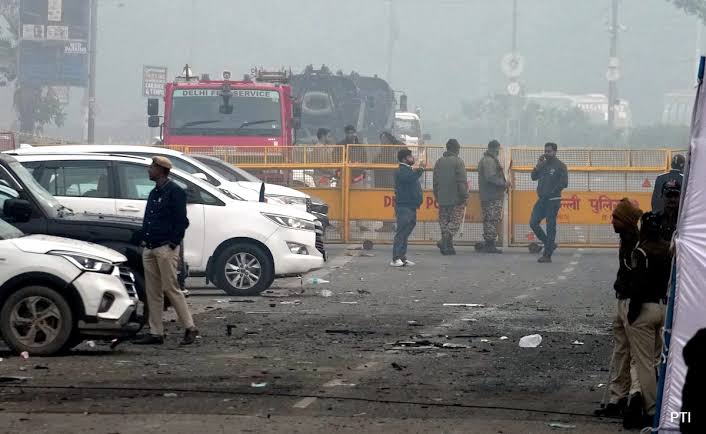
In a related development, a Delhi court on Monday extended by four days the National Investigation Agency (NIA) custody of three doctors and a preacher arrested in connection with the November 10 Red Fort blast case.
The accused—Dr. Muzammil Ganai, Dr. Adeel Rather, Dr. Shaheena Saeed, and Maulvi Irfan Ahmed Wagay—were produced before the court after their initial 10-day remand expired.
The NIA has so far made seven arrests in the case, which involves a ‘white-collar’ terror module initially uncovered by the Jammu and Kashmir Police.
The agency stated it is pursuing multiple leads and conducting coordinated searches across states to identify all individuals involved in the attack.
The suicide bombing, which killed 15 people and injured many others, was carried out using an explosives-laden vehicle driven by Dr. Umar-un-Nabi.
Previous reports indicated that the sophisticated module, led primarily by medical professionals, had been actively seeking a suicide bomber since last year, with Umar allegedly serving as a key planner.
This investigation proceeds amid a broader decline in militancy and an improved law-and-order situation in the Valley.
Earlier this year, at least 12 separatist groups affiliated with Hurriyat factions renounced separatist politics and reaffirmed their faith in the Constitution of India.
Speaking to Kashmir Convener in an earlier interview, Hakeem Abdul Rashid, once a prominent associate of Hurriyat hardliner Syed Ali Shah Geelani, announced his departure from separatism.
He expressed that he had been misled in his efforts to bring peace to Kashmir.
“I am very grateful to Home Minister Amit Shah for acknowledging our interest in joining the mainstream,” he said.
“I was under a misconception that affected peace in Kashmir on a larger scale. Now, I am very happy to be a part of Kashmir’s beautiful future, where peace, prosperity, and development are prioritized.”
Rashid appealed to those still affiliated with separatist groups to abandon that path and unite for a peaceful Kashmir.
Union Home Minister Amit Shah, in a post on social media platform X, credited Prime Minister Narendra Modi’s vision of ‘Ek Bharat, Shreshtha Bharat’ (One India, Great India) for fostering unity in Jammu and Kashmir.
He emphasized that these groups have now placed their trust in the Indian Constitution.
“Under the Modi government, the spirit of unity prevails in J&K. The Jammu and Kashmir Mass Movement has rejected separatism and declared complete allegiance to Bharat. I wholeheartedly welcome their decision,” Shah stated. He added, “With twelve Hurriyat-linked organizations now distancing themselves from secessionism, this marks a triumph of PM Modi’s vision for a united India.”
Jammu and Kashmir Lieutenant Governor Manoj Sinha last month has said that the practice of “rewarding separatists and torturing patriots” has been stopped completely in the Union Territory.
“After a long wait of 67 years, the provisions of the Constitution were made fully applicable to J&K in 2019, ending the rule of discrimination and injustice. Those who ask what was achieved over the past five years, I want to tell them that the practice of rewarding separatists and torturing patriots has been stopped completely,” Mr. Sinha said while speaking at an event commemorating Constitution Day in Jammu.
“J&K is now moving ahead, guided by the ideals of equity, social, and economic justice as enshrined in the Constitution by Babasaheb Ambedkar,” he said.
“From day one, my mission in J&K was to improve the lives of our citizens, to eradicate discrimination and injustice, eliminate the terror ecosystem, and to make sure that the benefits of Central schemes reached the lowest strata of the society,” the L-G said.


Comments are closed.