

Suhail Khan
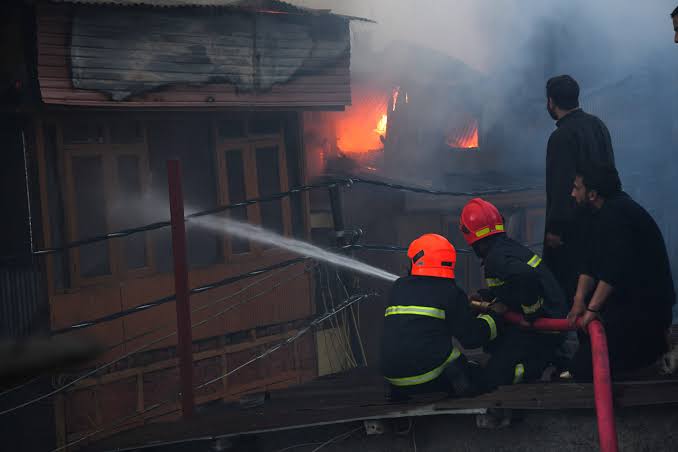
SRINAGAR, Dec 08: 468 Fire incidents were recorded in Kashmir from January through November 2025, according to the Fire and Emergency Services Department.
However the figure reflects notable decrease from the 720 incidents reported in the year 2024.
In an exclusive interview with Kashmir Convener, Dr. Aqib Hussain Mir, Assistant Director of the Fire and Emergency Services Kashmir, highlighted a clear seasonal pattern.
He stated there is no doubt that with the onset of cold weather, officials witness an increase in fire incidents compared to summer. Last year, the monthly average stood around 60 incidents, whereas this year it is approximately 42. Despite the overall decline, he said they cannot ignore the increased hazard that winter presents.
Dr. Mir attributed the rise in cold-weather fires primarily to the use of heating appliances and liquefied petroleum gas. He explained that people bring these hazards into their homes, so the risk is always present. While these appliances are necessary in severe cold, it is crucial to use only standard equipment.
He advised consumers to avoid substandard products, check for ISI marks, verify license numbers, and even cross-reference details on official websites.
He emphasized that after purchasing certified equipment, users must diligently follow the attached safety guidelines. He noted that fires in winter often occur due to lapses in these basic precautions.
Speaking as a fire safety expert, Dr. Mir stated categorically that any indoor heater, whether electric, LPG-based, or an electric blanket, poses a potential hazard. Safety is often treated as secondary, but he stressed it must be a primary concern to prevent tragedies.
To build a fire-resilient environment, Dr. Mir outlined three key guidelines from the National Building Code: Fire Prevention, Life Safety, and Fire Protection.
Fire Prevention involves reducing ignition risks. He said prevention is better than cure, noting that homes contain combustible materials, LPG, and other fuels, so adherence to preventive measures is essential.
“while modern concrete structures offer better fire resistance than older wooden homes, materials must still carry appropriate fire-resistant ratings,” he said.
Life Safety focuses on safe evacuation. He warned that this aspect is often neglected, and that exits must be sufficient in number and size for the occupant load. In any emergency, inadequate exits hinder swift evacuation.
Fire Protection includes active systems such as fire extinguishers. He stressed that a major reason for extensive damage is the absence of extinguishers in homes. No fire starts as a major blaze; it begins with a spark. If controlled early, disaster can be averted.
He urged the public, especially women who frequently manage high-risk areas like kitchens, to seek training at local fire stations in the use of extinguishers.
Dr. Aqib Hussain Mir also underscored the importance of preparedness. He said most people do not keep the contact number of the Fire and Emergency Services, and that in a crisis, panic and communication gaps occur. He advised every citizen to save the number of their nearest fire station and report incidents immediately. The central emergency contact is 101.
Referring to current conditions, he noted that the ongoing dry spell has contributed to increased incidents, including forest fires.
His advisory to the public included several key points. Residents near forests should avoid hazardous practices such as charcoal burning. People should use only standard heating equipment and adhere to safety guidelines. Old heating gadgets should be professionally serviced before use. Everyone must ensure safe LPG practices for cooking and heating, with proper ventilation.
“ It is important to always switch off electrical appliances before sleeping or leaving home. Finally, the public should actively participate in awareness programs conducted by the Fire and Emergency Services Department,” he said.
Comments are closed.