

Suhail Khan
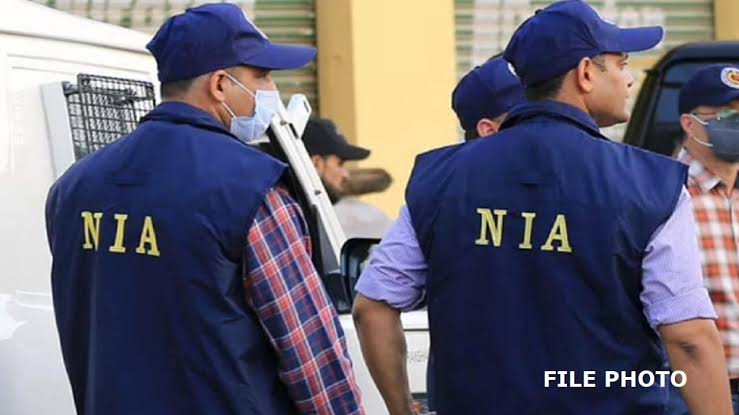
Srinagar, Nov 20: The National Investigation Agency (NIA) announced on Thursday that it has arrested four more prime accused persons linked to the November 10 blast near the Red Fort metro station in Delhi. This brings the total number of arrests in the case to six.
In a statement issued to Kashmir Convener, the agency identified the four individuals as Muzammil Shakeel Ganai from Pulwama, Jammu and Kashmir; Adeel Ahmed Rather from Anantnag; Mufti Irfan Ahmad Wagay from Shopian; and Shaheen Saeed from Lucknow, Uttar Pradesh.
“The four accused were taken into custody by the NIA in Srinagar, Jammu and Kashmir, on production orders from the District Sessions Judge of the Patiala House Court,” the statement added. The NIA claimed that all four played a “key role” in the terror attack.
The blast near the Red Fort metro station on November 10 left 13 people dead. A doctor named Umar Nabi is believed to have been driving the car that exploded. Two days after the explosion, the Union government described it as a “terrorist incident.”
The following Sunday, the agency arrested an aide allegedly linked to Nabi, identified as Amir Rashid Ali. The NIA alleged that the Hyundai i20 car used in the blast was registered in Ali’s name, marking the first arrest in the case.
A day later, the NIA arrested another alleged key associate linked to the doctor. He was identified as Jasir Bilal Wani alias Danish, a resident of Qazigund in Anantnag, Jammu and Kashmir, and was apprehended in Srinagar.
“NIA investigations have revealed that Jasir had allegedly provided technical support for carrying out terror attacks by modifying drones and attempting to make rockets ahead of the deadly car bomb blast…” the agency stated at the time. Wani was described as an “active co-conspirator” behind the attack who had worked closely with Nabi to “plan the terror carnage.”
A Delhi court on Tuesday remanded Wani to 10 days in the custody of the NIA.
The NIA said on Thursday that it is working closely with state police forces “to track and arrest every member of the terrorist module involved in the carnage.”
Hours before the blast, police reported that they had cracked an “inter-state and transnational terror module” in Faridabad and Saharanpur, Uttar Pradesh. Two doctors from Kashmir – Adeel Ahmad Rather and Muzamil Shakeel – were among those arrested in that case. The police said they had recovered 2,900 kg of improvised explosive device-making material in raids across several states.
In the backdrop of the blast and the terror module case, the Jammu and Kashmir Police conducted raids on November 12 at more than 300 locations in the Kashmir valley. These locations were allegedly linked to persons affiliated with the banned Jamaat-e-Islami. The police stated that the actions were taken after intelligence indicated that elements linked to the organization, which is banned under the Unlawful Activities Prevention Act, were trying to revive it under different names.
The authorities in Jammu and Kashmir have not officially linked the terror module and blast cases with the ongoing raids.
The Jammu and Kashmir Students Association flagged on Monday that Kashmiri students in several northern states are facing profiling, eviction, and intimidation in the aftermath of the November 10 blast.
Meanwhile, in response to the recent bomb blast in Delhi and its established links to Kashmir, a high alert has been declared across the borders of the Union Territory. Security forces, including the Army and police, have intensified measures along all mountainous and border regions.
Official sources informed Kashmir Convener that extra checkpoints have been established from the summer capital, Srinagar, to all border areas. Security personnel are conducting vehicle frisking with modern gadgets and have intensified identity verification at major junctions, bus terminals, and entry points.
The security surge follows the November 10 explosion at New Delhi’s Red Fort, which resulted in more than ten fatalities.
An official stated that the measures are precautionary and essential. “Frisking has been intensified in markets, railway stations, and other public places, and Cordon and Search Operations (CASOs) are being launched to ensure public safety,” he said.
The officials added that alertness remains high in border areas, with searches conducted along key highways. Police are maintaining vigilance with vehicle checks in both directions and the frisking of civilian vehicles as part of the larger security operations. The Army and Border Security Force (BSF) are also maintaining a high state of vigilance along the International Border and the Line of Control (LoC) to prevent any potential threats.
Earlier this week, Northern Army Commander Lieutenant General Pratik Sharma visited North Kashmir to review the anti-infiltration grid and assess the operational readiness of formations deployed along the LoC. During his visit to forward areas, Lt. Gen. Sharma interacted with troops, commending their high level of combat readiness, steadfast morale, and professional excellence. He praised their “indomitable spirit” in safeguarding the border under challenging conditions and urged soldiers to continue rigorous training and adopt modern technologies to remain a “Future Ready” force.
In a separate public-safety initiative, police in Poonch district have announced a reward of ₹5 lakh for “credible, specific, and actionable” information on the presence or movement of terrorists or their associates. To protect informants, police have guaranteed complete confidentiality. The public has been urged to report individuals providing terrorists with food, lodging, transportation, logistics, safe havens, or communication support. Information is also sought on those involved in financing, recruitment, networking, or reporting security force movements for terrorist activities.
Comments are closed.