
The Myth of Objectivity: How Baramulla Demonizes What It Can’t Understand
By Dr Toyeba Mushtaq

InkLink
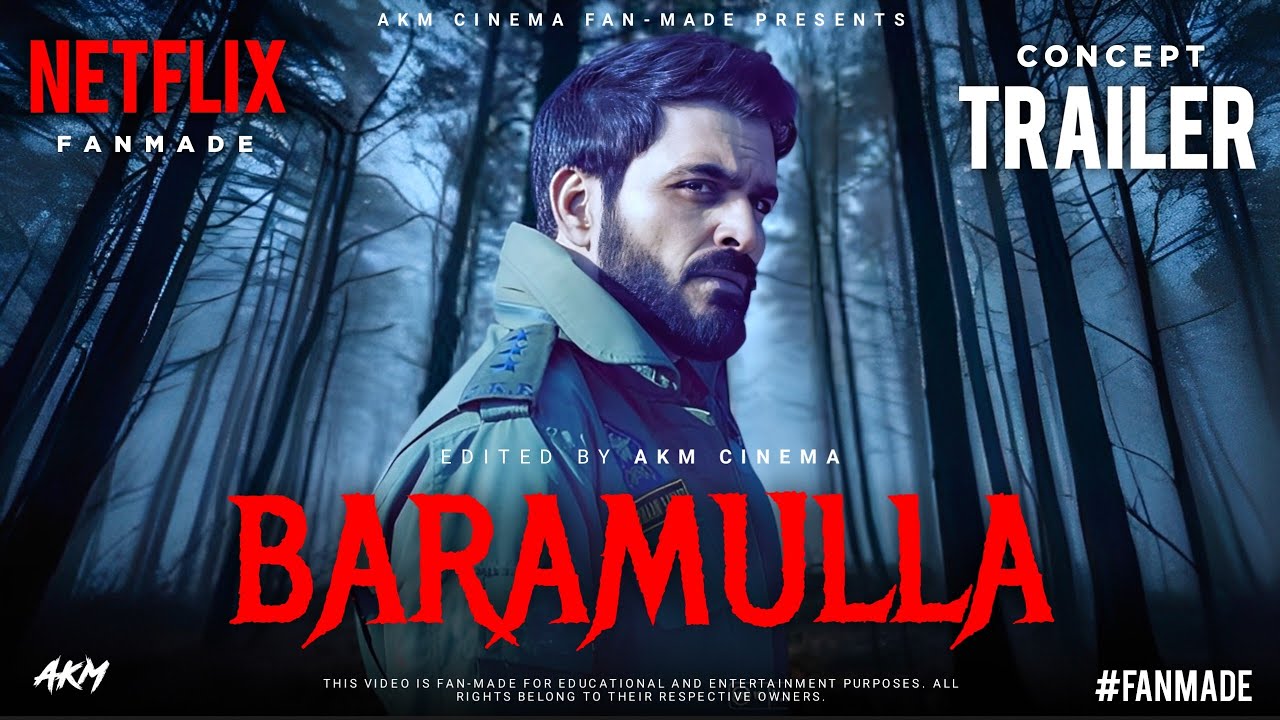
Baramulla opens with the abduction of an MLA’s young son and situates itself within the unsettling phenomenon of children disappearing in the North Kashmiri town of the same name.
The narrative introduces the figure of the djinn, a mythical ghost-like creature, intended perhaps as a symbolic presence, but used largely as an ornamental backdrop rather than a fully realised metaphor.
The mention of the djinn initially evokes a sense of nostalgia. For many Kashmiris, the djinn and the raantas (witches) are part of an inherited oral tradition; bedtime tales whispered by grandparents during long, cold winters, stories that both frightened and fascinated us as children.
The invocation of such folklore could have been a powerful way to connect contemporary anxieties with cultural memory. However, Baramulla misuses this mythology. The film is falsely pitched as a horror narrative but, beneath the surface, operates more as a politically motivated commentary.
What could have been an exploration of the supernatural as a metaphor for fear, loss, or intergenerational trauma becomes instead a tool to advance a reductive political agenda.
While the film gestures toward authenticity through occasional forced use of Kashmiri words and local settings, these elements appear more performative than organic. The language choices and scenic depictions seem designed to assert the film’s regional grounding rather than to engage meaningfully with Kashmiri life or culture.
Beneath this veneer, Baramulla advances a politically charged and deeply problematic narrative that recycles familiar and reductive tropes: young Kashmiri boys as “brainwashed” stone-pelters or as individuals susceptible to crossing borders and becoming militants.
Moments such as the word “Kaafir” scrawled outside Manav Kaul’s home by children, or the depiction of a Muslim girl betraying another, reinforce a troubling demonization of Kashmiri Muslims.
The film’s inconsistencies further weaken its credibility, most notably when Manav Kaul’s character, a DySP in the J&K Police, appears inexplicably in army uniform during the Reasi encounter sequence.
His wife’s foray into an “unknown world,” a loosely borrowed concept from Insidious, conveniently grants her supernatural knowledge of all the missing children’s names, a narrative leap that feels unearned and incoherent.
The portrayal of protests demanding the DySP’s resignation strains plausibility, as such actions are uncharacteristic of Kashmir’s sociopolitical reality. The film’s script intermittently references Afghanistan and Palestine, invoking global conflicts without context or purpose, seemingly to conflate and sensationalize rather than to illuminate.
In its conclusion, the djinn’s refrain, “Dobara na, dobara na” (“Never again”) is revealed to mean that the spirit was “protecting” these allegedly brainwashed children by transporting them to another realm. This resolution attempts to merge political commentary with supernatural allegory but ultimately trivializes both.
By conflating horror with propaganda, Baramulla undermines the potential of its own premise. What might have been an opportunity to explore myth, loss, and the psychology of fear instead devolves into a work driven by agenda and stereotype.
The film’s claim to authenticity, through location shooting and casting local actors, cannot compensate for its lack of nuance or its narrow, vilifying lens.
In the end, Baramulla reflects less on the region it seeks to portray and more on the filmmaker’s inability to look beyond a singular, politicized narrative. It is not the story of Kashmir that emerges, but the story of how Kashmir continues to be misrepresented.
The writer is a researcher and film programmer of South Asian Cinema. She can be mailed at toyebapandit@gmail.com
Comments are closed.